A Neuro-Memetic Analysis of Incentives, Ledgers, and Long-Horizon Failures
Abstract
This paper presents a novel critique of modern market-driven systems through a Cognicist lens that integrates incentives, neurobiology, memetics, tokenism, and connectomics. While historically, socio-economic frameworks like Das Kapital and The Wealth of Nations have attempted to guide our understanding of economic relations, they often miss the cognitive dimension underpinning how incentives actively restructure our neural architectures and social behaviors. Markets, at their core, function as distributed optimization algorithms that align individual incentives to achieve mutual benefit. However, these systems also recursively program human cognition, reinforcing patterns of thought that perpetuate their own logic, which can lead to misaligned priorities and systemic over-optimization.
Cognicist theory posits that profit functions as a misaligned reinforcement learning loss function for collective human decision-making, systematically neglecting warnings about future ecological and social collapse unless those warnings can be monetized in the short term. Drawing from foundational texts, such as The Geometry of Culture: Mapping Memetic Space, The Cognicist Manifesto, and Profit is a Paperclip Maximizer, this paper shows how repeated short-term signals create “self-reinforcing bubbles” of near-term thinking, literally rewiring cognition at scale.
We introduce the concept of a “prophet”, an individual or group able to foresee negative externalities or crises, and explore why capitalist ledgers cannot currently integrate prophetic insight unless it is tied to near-term ROI. We introduce this concept of “prophet” in contrast to “profit” to distinguish between monetizable and non-monetizable foresight. Further, we examine how memetic bubbles (akin to “markov blankets” in neural terms) reject unmonetized truth signals until mounting contradictions force a systemic collapse. These patterns manifest as what are commonly known as market bubbles, not an aberration or side effect that can be regulated away, but an inherent feature of how token-based incentives shape human cognition. By analyzing these cognitive and economic barriers, we outline the Cognicist solution, retrofitting ledgers to reward and amplify non-monetizable predictive capacity over multi-decade scales.
Such an upgraded ledger aims not to abolish capitalism’s adaptive power but to evolve its metrics, unifying short-term efficiency with the moral and ecological imperatives that ensure humanity’s future. Ultimately, Cognicism calls for truth-centric progress over pure “number-go-up”, bridging the gap between the modern ledger’s blind spots and the urgent need to heed those who see tomorrow before it becomes disaster.
1. Introduction: The Missing Cognitive Dimension
1.1 The Two-Party Benefit Problem
Free markets have historically served as a powerful mechanism for aligning individual incentives to achieve mutual benefit. A typical market transaction ensures that at least two parties benefit: the buyer receives something they value more than the money they paid, and the seller receives compensation they value more than the product or service exchanged. This dynamic creates mutual gain and operates as a localized optimization algorithm for individual benefit. When information flows freely between participants and both sides voluntarily agree to the terms of exchange, markets are inherently self-regulating at a small scale.
However, this framework reveals its limitations as markets scale. While a transaction benefits the two immediate participants, it often externalizes costs to third parties, such as environmental damage, labor exploitation, or societal inequities, or pushes consequences onto future generations, such as resource depletion or ecological collapse. These externalities are unaccounted for within the traditional market ledger, creating systemic blind spots that grow larger over time.
By contrast, government interventions have historically attempted to address these blind spots, but with limited success. Governments, as centralized systems, lack the agility and real-time feedback loops that characterize market transactions. Policies are imposed top-down, often benefiting select groups, such as corporations, interest groups, or particular social classes, at the expense of others. This can create zero-sum or even negative-sum outcomes, where harm outweighs benefit. Furthermore, the scale and bureaucracy of governments lead to inefficiencies, misaligned incentives, and outcomes that fail to serve the collective good.
At their core, markets and governments represent optimization systems with distinct limitations:
- Markets optimize for short-term, localized benefit but ignore long-term or distributed externalities.
- Governments attempt to address systemic issues but fail to scale effectively, introducing inefficiencies and distorting incentives.
Historically, free markets were the best tool humanity had for ensuring collective benefit, as they aligned individual self-interest with mutual gain. Yet as markets expand and become more complex, their reliance on narrowly defined transactions creates systemic vulnerabilities. Over time, markets become susceptible to reward hacking, exploiting the system to maximize profit without creating corresponding value, and over-optimization, where short-term gains are prioritized at the expense of long-term sustainability.
By failing to account for these externalities, both markets and governments have contributed to a system that prioritizes immediate rewards over the broader, long-term collective good. These systemic gaps form the foundation of the modern socio-economic challenges that Cognicism seeks to address.
1.2 The Reinforcement Learning Algorithm of Profit
Cognicism views profit as a reinforcement learning algorithm that (1) modulates dopaminergic and motivational pathways in the human brain, (2) triggers repeated behaviors correlated with “number go up,” and (3) intrinsically repels signals about unmonetized or distant hazards. Conceptually, this parallels the way a paperclip-maximizing AI might trample human values if unbounded, humans themselves become local maxima chasers for short-term profit in a system that does not assign value to intangible, future-focused truths.
This distortion grows more pronounced as markets scale and over-optimization begins to take hold. Initially, markets serve as distributed optimization systems, aligning incentives and producing mutual benefit through transactions. However, over time, reward hacking, where systems exploit shortcuts to maximize profit without addressing broader value, detaches markets from their original purpose. This misalignment engrains itself into human neural structures, reinforcing patterns of behavior that prioritize token-driven incentives over long-term, collective well-being.
By reframing profit as a misaligned loss function, Cognicism reveals the systemic gap: markets prioritize immediate transactions and short-term gains while ignoring externalities and long-term risks. To address this, markets must evolve to integrate predictive capacity and distributed accountability, ensuring that decisions account for humanity’s broader survival and moral imperatives.
1.3 Traditional Economics vs. Cognicist Insights
From Adam Smith’s focus on “the invisible hand” to Karl Marx’s emphasis on class structures, standard economic theory tends to treat human behavior as a function of rational self-interest or socio-political struggle. While these macro-analyses are crucial, they often overlook how neural architectures shape, and are shaped by, the systems they inhabit. At their core, markets function as distributed optimization algorithms, aligning local incentives to produce mutual benefit through voluntary transactions.
However, markets do not merely optimize the allocation of resources, they recursively program the cognitive and cultural frameworks of their participants. The Cognicist Theory of Capitalism intervenes by adding a neuro-memetic layer: specifically, how token-driven incentives (such as money or other tokenized assets) systematically rewire collective human cognition over time. This recursive feedback loop engrains market-driven priorities into the neural pathways of individuals, encouraging near-term optimization while discounting long-horizon realities like climate collapse or structural inequality.
So where does Cognicism exist within the broader political landscape?
Cognicism is a belief about recording beliefs across time. It is an ideology about ideologies. It primarily views governance and markets as informational processes that exist within the mind.
Cognicism therefore does not cleanly map onto the typical left-right or authoritarian-libertarian political compass. Cognicism operates more like a scientific or democratic process: a continuous, open-ended mechanism for gathering information, recording predictions, and reflecting on past errors. In effect it learns from many systems and can function within and on top of many other systems. Its core proposition is that better measurement and iterative feedback loops lead to better outcomes, regardless of the prevailing economic model. In this sense, Cognicism “floats above” traditional political continua, focusing instead on how societies can iteratively improve decision-making by embedding accountability, moral alignment, and long-horizon thinking into their ledgers and institutions.
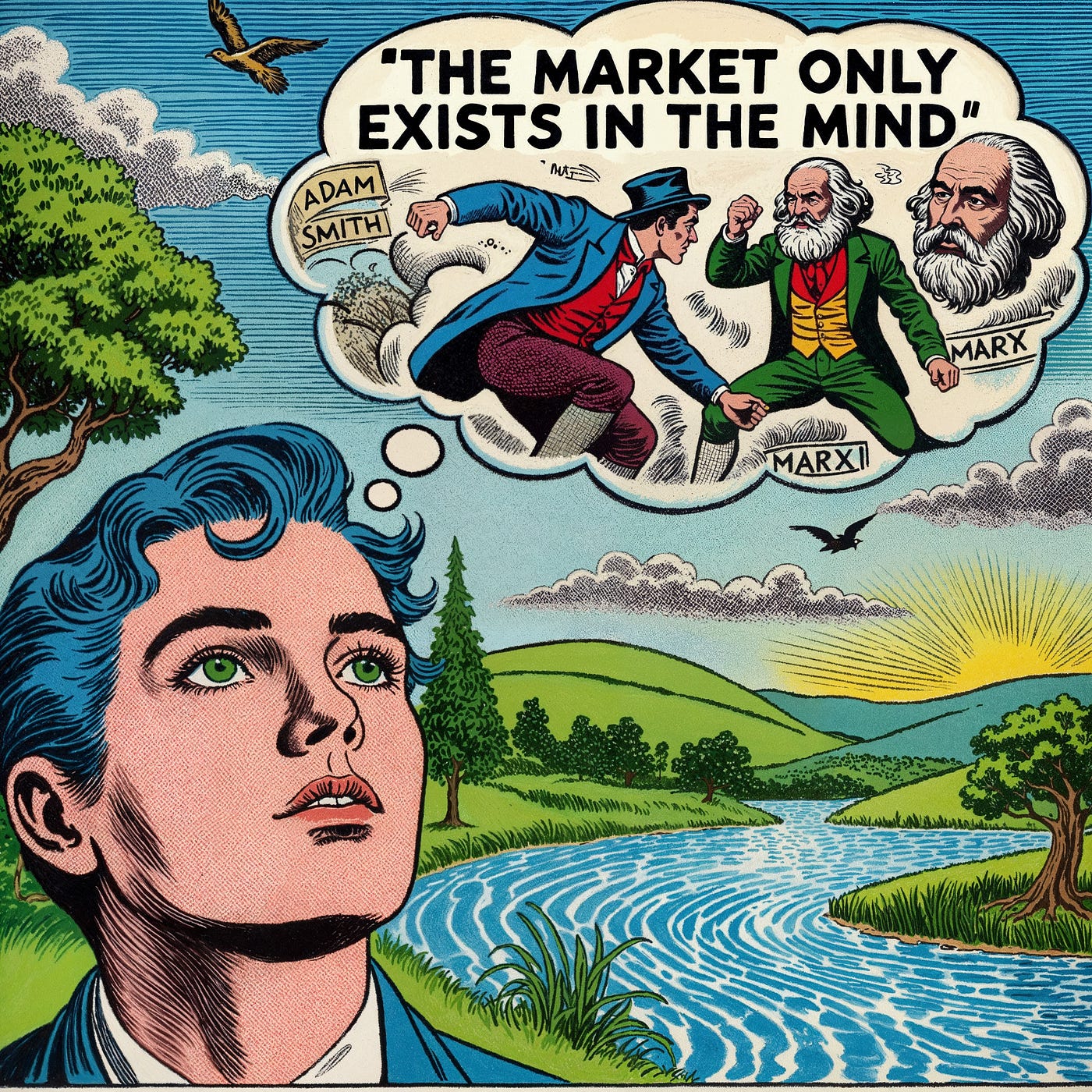
This perspective also helps illuminate how Cognicism resonates with, yet diverges from, both Adam Smith’s and Karl Marx’s analyses. Smith’s early warnings in The Theory of Moral Sentiments underscored the role of trust and empathy in market relations, while The Wealth of Nations highlighted the dangers of joint-stock structures that sever accountability from moral responsibility. While modern “market purists” often imply that the motion of the market is morality, Adam Smith himself insisted that a moral frame and trust between those engaging in transactions were essential for functional markets. All of this is strongly resonant with the Cognicist frame.
At the same time, Marx’s critique of capitalist exploitation resonates with Cognicism insofar as it exposes how those controlling access to resources can impose structural inequalities on people seeking to compete within those markets. A market can not be an optimizer for collective potential if a large number of the players are unable to be assessed for merit due to their lack of resources. However, Marx’s vision of a society without a ledger, or at least without a formal mechanism to track and proportionally reward contributions relative to outcomes, diverges sharply from Cognicism’s emphasis on measurement. Rather than focusing on class struggle as the primary driver of history, Cognicism posits that “classes” (like markets) only exist in the mind. They are essentially Markov-blanketed subsystems that foster in-group vs. out-group dynamics. There is no magical line between the ruling class and labor. These are just constructs of the mind that affect how we interface through systems. While it acknowledges that some individuals will inevitably have more resources or influence, Cognicism seeks to align that influence with the collective good by rewarding contributions that enhance long-term sustainability. In this view, wealth should function as a form of stewardship rather than mere ownership: assets are best employed not simply for private gain, but for the prudent use of resources in service of broader social and ecological resilience.
Crucially, Cognicism does not seek to abolish private property or undermine personal assets. Individuals retain full ownership of their money and possessions; the Cognicist ledger only affects how one’s voice is amplified in collective decision-making, based on demonstrable foresight or positive contributions. The goal is in effect to extend democracy into a rich continuous and reflective process that integrates prediction over time without requiring citizens to “bet” capital to earn trust within the system. This distinction makes Cognicism a layered approach rather than a replacement: property rights remain intact, but owners are encouraged, through reputation and reward mechanisms, to steward resources responsibly.
The Cognicist lens is that markets, governments, and socio-economic systems like Capitalism, Socialism, and indeed Cognicism itself exist primarily in the mind. Concepts like ownership, stewardship, or collective control are ultimately shared beliefs about who controls what. When enough people agree that a certain asset belongs to someone, that belief defines ownership; if that consensus breaks down, society labels it theft or dispute. In the same way, stewardship, collective ownership and private property are mental constructs that guide how we allocate resources. Recognizing this cognitive dimension reveals how neural dynamics, trust, and shared moral frames shape economic behavior as much as physical supply and demand do.
In short, the Cognicist view is that ledgers themselves are valuable tools, provided they capture the right data. Ledgers are tools that help guide processes that are inherently mental in nature. Provided the right feedback mechanisms, different societies emerge differently through their respective markets and governance structures. By instituting feedback loops that reward accurate predictions, moral foresight, and wise resource use, Cognicism aims to evolve markets and democratic processes beyond short-term gains, embedding genuine accountability and resilience into the core of economic, civic and social life.
1.4 Scaling Constraints of Governance: Ash’s Law
Given profit’s role as a misaligned optimizer, the traditional response has been to impose regulatory constraints through governmental oversight. This instinct seems natural, if markets misalign human cognition toward short-term gains, then surely we need a counterbalancing force to protect longer-term interests. Indeed, at small scales this logic holds: local governments can effectively monitor and regulate local markets because the information flows remain manageable and feedback loops remain tight. The success stories of government regulation almost invariably come from smaller systems where oversight can remain responsive and contextual.
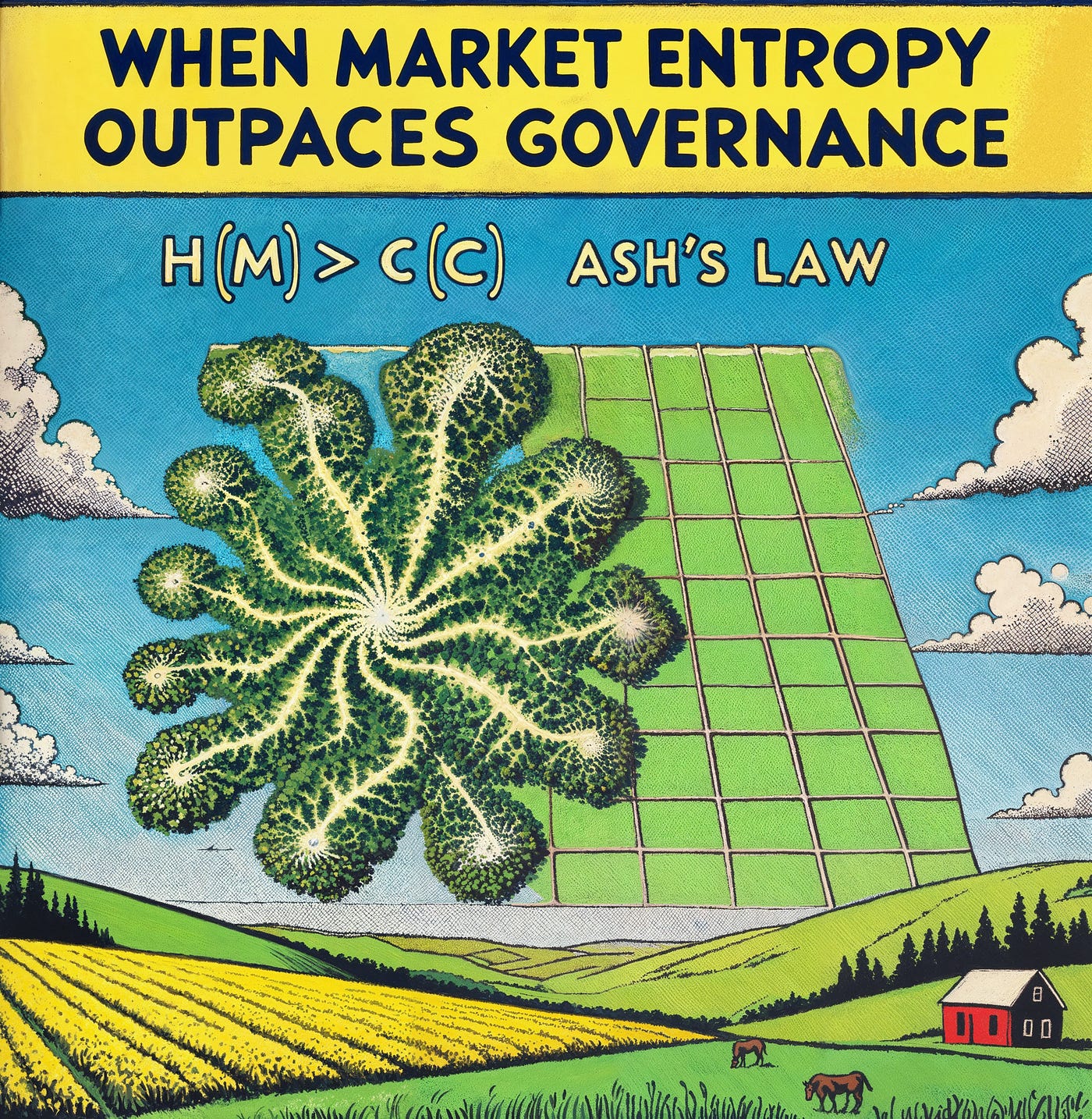
However, this solution breaks down fundamentally at scale. As markets grow more complex, the regulatory apparatus must expand proportionally, leading to an entirely new set of cognitive and structural limitations. This breakdown is captured by Ash’s Law, which asserts that centralized governance systems fail to scale effectively in proportion to the complexity of the system they regulate, exposing a fundamental tension between the size and efficacy of governance structures. As a system grows, the demands on governance to process, integrate, and act upon a vast array of signals from disparate sources increase exponentially. This creates a problem of scale, the larger the system, the more complex the information flow, and the more challenging it becomes for centralized entities to interpret, act on, and synthesize that information in a meaningful way.
An insightful parallel emerges when we consider Ashby’s Law of Requisite Variety, which states that only a controller with a range of responses matching the system’s complexity can effectively manage it. In modern markets, where the interactions and possible disturbances grow exponentially, no centralized governance system can possibly muster the requisite variety to respond appropriately as a “controller” of the market. This reinforces the core premise of Ash’s Law: as market complexity scales beyond linear growth, the inherent limitations of any single regulatory authority become apparent, necessitating alternative or decentralized mechanisms that can better absorb the system’s expanding variety.
At smaller scales, governance systems can function with relative efficiency. The flow of information within smaller, localized systems is typically more manageable and directly actionable. A system like Vermont or Switzerland, with populations in the low millions, can more easily encode, transmit, and decode information within a relatively small and homogeneous context. The central government in these cases can better align policy with local realities, adjusting based on real-time feedback from citizens and responding with precision to the nuances of localized challenges.
The Cognitive and Governance Bottleneck
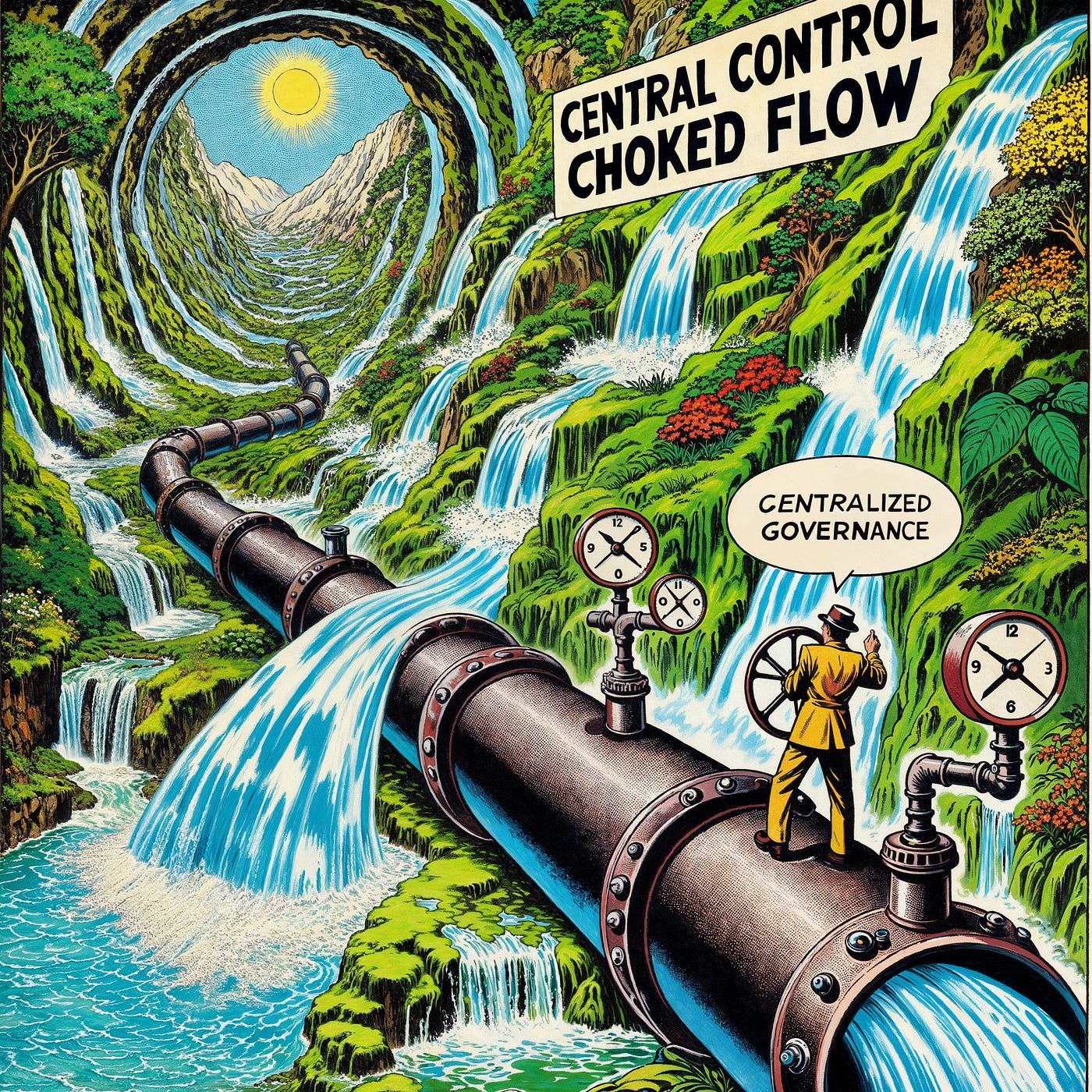
This law is best understood through the lens of information processing demands. A governance system must maintain coherent models of the territory it oversees while processing an ever-growing stream of inputs. Just as a human mind struggles to track too many variables at once, centralized governance hits cognitive limits when faced with exponentially increasing complexity. As populations grow, needs diversify, and global events accelerate, the system’s capacity to maintain an accurate model of reality diminishes.
This phenomenon is akin to a single server attempting to handle a rapidly growing volume of requests. The cognitive capacity of centralized governance becomes overwhelmed. As information floods in from multiple sources with varying contexts and priorities, the ability of centralized authorities to process and integrate it in a timely and effective manner diminishes. The result is a bottleneck: the system, in its effort to maintain control and coherence, can no longer respond with the flexibility required to address the diverse and evolving needs of its constituents.
This cognitive bottleneck is a direct consequence of the scaling limitations in centralized systems. The more inputs the system must process, the less effective it becomes at synthesizing those inputs into coherent action. As a result, centralized systems struggle to represent or respond to the diverse needs and signals from society, particularly when those signals are too complex or spread across too many layers.
The fact that governments struggle to manage complexity doesn’t mean markets can successfully optimize for long-term human wellbeing at scale. From financial meltdowns to ecological devastation, history shows how pure market forces often fail to prevent systemic harm. What’s needed isn’t just oversight, but new frameworks that can effectively process and respond to complex signals about our collective future. To understand these failures, we must examine the relationship between markets and human cognition at scale.
1.5 Ash’s Law Formalized
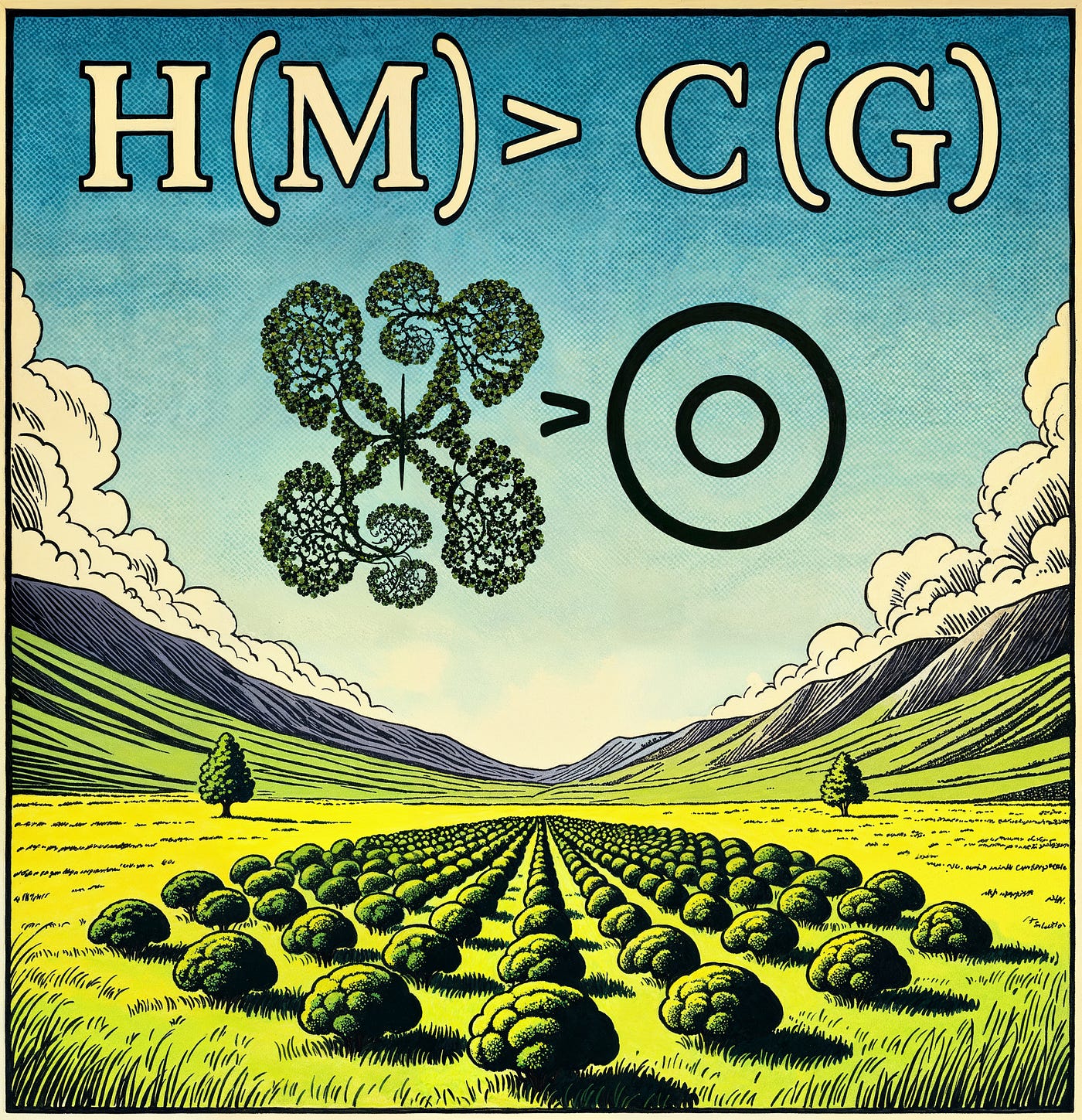
Ash’s Law formalizes the scaling mismatch between the complexity of markets and the capacity of centralized governance to regulate them. As markets expand, the total information required to understand, model, and regulate them, the market’s complexity or entropy (H(M)), grows superlinearly, often exponentially. Meanwhile, the effective channel capacity of a government (C(G)), its ability to process and act on market signals, grows only linearly or sublinearly, constrained by finite resources, hierarchical bottlenecks, and political noise. Formally:
H(M) ~ f(n),
C(G) ~ g(n),
where f(n) grows faster than g(n).
Here, n represents the scale of the market, such as the number of participants or transactions. For sufficiently large n > n_0, the market’s complexity outstrips the government’s capacity (H(M) > C(G)), making comprehensive oversight impossible.
Exponential vs. Linear Growth
Markets exhibit superlinear scaling in complexity due to:
- Multiplicity of interactions: The number of possible relationships among agents grows combinatorially with market size.
Governments exhibit linear or sublinear scaling in capacity due to:
- Channel capacity constrained by hierarchical bottlenecks and amplified noise in signal processing.
The Tipping Point and Regulatory Breakdown
The tipping point n_0 marks the scale beyond which markets become too complex for centralized oversight. At this stage, regulatory lag, the gap between market evolution and governmental response, becomes systemic, and blind spots emerge. These blind spots allow unregulated externalities, emergent risks, and systemic failures to proliferate, undermining both market stability and long-term human wellbeing.
Ash’s Law highlights the fundamental structural limitations of centralized governance in the face of ever-scaling market complexity. Addressing this mismatch requires a reevaluation of regulatory strategies and governance frameworks to ensure stability and oversight in increasingly complex systems.
1.5 Outline and Roadmap
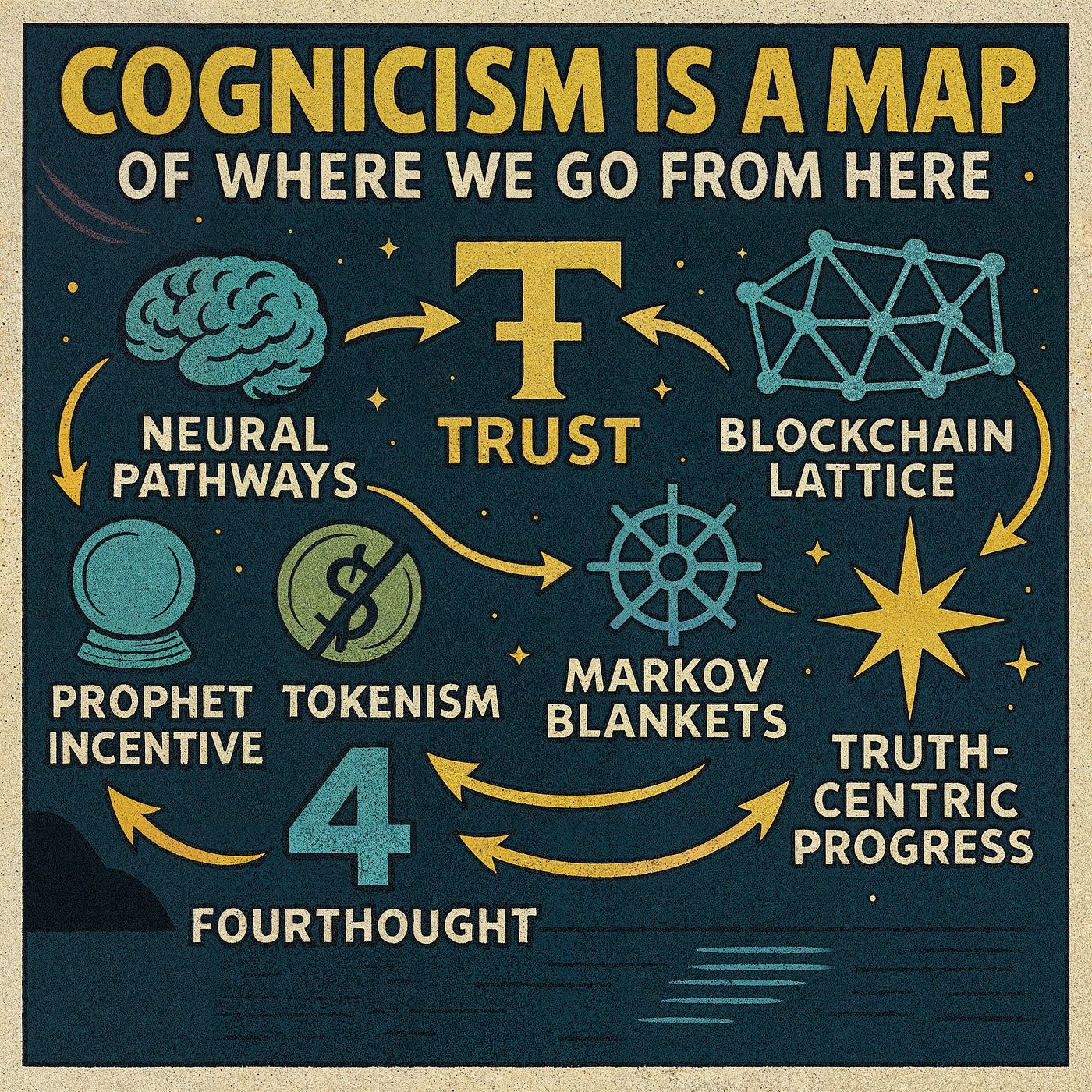
This paper proceeds as follows:
- Section 2 grounds Cognicist theory in neurobiology, memetics, and the energy constraints of human cognition. It explores how token-driven incentives rewire decision-making at both neural and cultural levels, systematically prioritizing short-term gains over long-term truths. Through concepts like neural annealing and cognitive bubbles, the section illustrates how deeply ingrained incentive loops distort collective cognition, suppressing foresight and systemic adaptation. A detailed case study of Elon Musk highlights how market pressures reorient even visionary leaders toward near-term profitability at the expense of long-term missions.
- Section 3 investigates the systemic failures of markets to integrate long-term insights, focusing on the exclusion of “prophetic voices” from decision-making frameworks. It begins by critiquing the “loss function” of profit, which systematically discounts externalities and future risks. The section then explores how market mechanisms prioritize noise, short-term and often meaningless signals, over foresight. Through concepts like memetic bubbles and ledger exclusion, it reveals how unprofitable truths are filtered out cognitively, socially, and economically. Finally, the “Prophet Incentive Gap” is examined, demonstrating how markets structurally repel accurate but uneconomic predictions, leaving societies vulnerable to preventable crises.
- Section 4 broadens the lens to examine how unstable economic metrics like money and subjective valuations impact collective decision-making. By contrasting the instability of monetary tokens with the universal stability of probabilistic measures, the section underscores the systemic failure to account for long-term risks and externalities. It also highlights the role of subjective assessments in market and democratic systems, emphasizing the exclusion of marginalized perspectives and the structural failure to integrate non-monetizable truths into societal priorities.
- Section 5 introduces the Cognicist solution: retrofitting economic ledgers to reward and amplify predictive capacity over multi-decade horizons. It details mechanisms for retroactive rewards, the role of Ŧrust as a dynamic reputational signal, and practical methods for integrating foresight into economic and social systems to ensure that accurate, contrarian insights are recognized and acted upon.
- Section 6 outlines the technological infrastructure for implementing Cognicist principles, including blockchain-based belief ledgers and real-time tracking of collective belief dynamics. This section highlights the inverse relationship between the temporal distance of predictions and their difficulty of validation, showing how the system naturally resists manipulation while dynamically amplifying accurate foresight over time.
- Section 7 discusses the broader implications and use cases of Cognicism across ecological, social, technological, and economic domains. It explores how embedding foresight and moral alignment into decision-making systems can transform neglected opportunities, such as regenerating sacrifice zones or addressing structural inequities, into actionable and incentivized behaviors that reshape societal priorities.
- Section 8 addresses potential criticisms of Cognicism, including concerns about speculative bubbles, utopianism, and challenges related to enforcement. It demonstrates how the framework’s design anticipates these objections, leveraging mechanisms like decentralized validation and dynamic feedback loops to ensure practical, scalable, and resilient implementation.
- Section 9 concludes by reframing capitalism’s failure modes through the Cognicist lens, emphasizing how its principles evolve market systems to unify near-term adaptability with the long-term moral and ecological imperatives that humanity’s survival demands.
2. Neurobiology, Memetics, and Token-Driven Incentives
2.1 Connecting Memetics to Incentive Loops
Previous research in memetics (Dawkins, 1976) frames ideas as “units of cultural transmission” that self-replicate through human communication. Cognicism merges this with incentive-driven neurodynamics and teleodynamics:
- Token-driven incentive: Money, stocks, or other tokenized assets become reinforcing tokens that shape which memes propagate within the connectomic landscape.
- Memetic cognition: The mind’s neural networks selectively amplify memes tied to these reinforcing tokens, ignoring less profitable or unmonetizable truths.
Just as repeated short-term cues lead to “paperclip-maximizing” outcomes for an AI, so does repeated “profit-maximizing” reconfigure memetic selection in human brains.
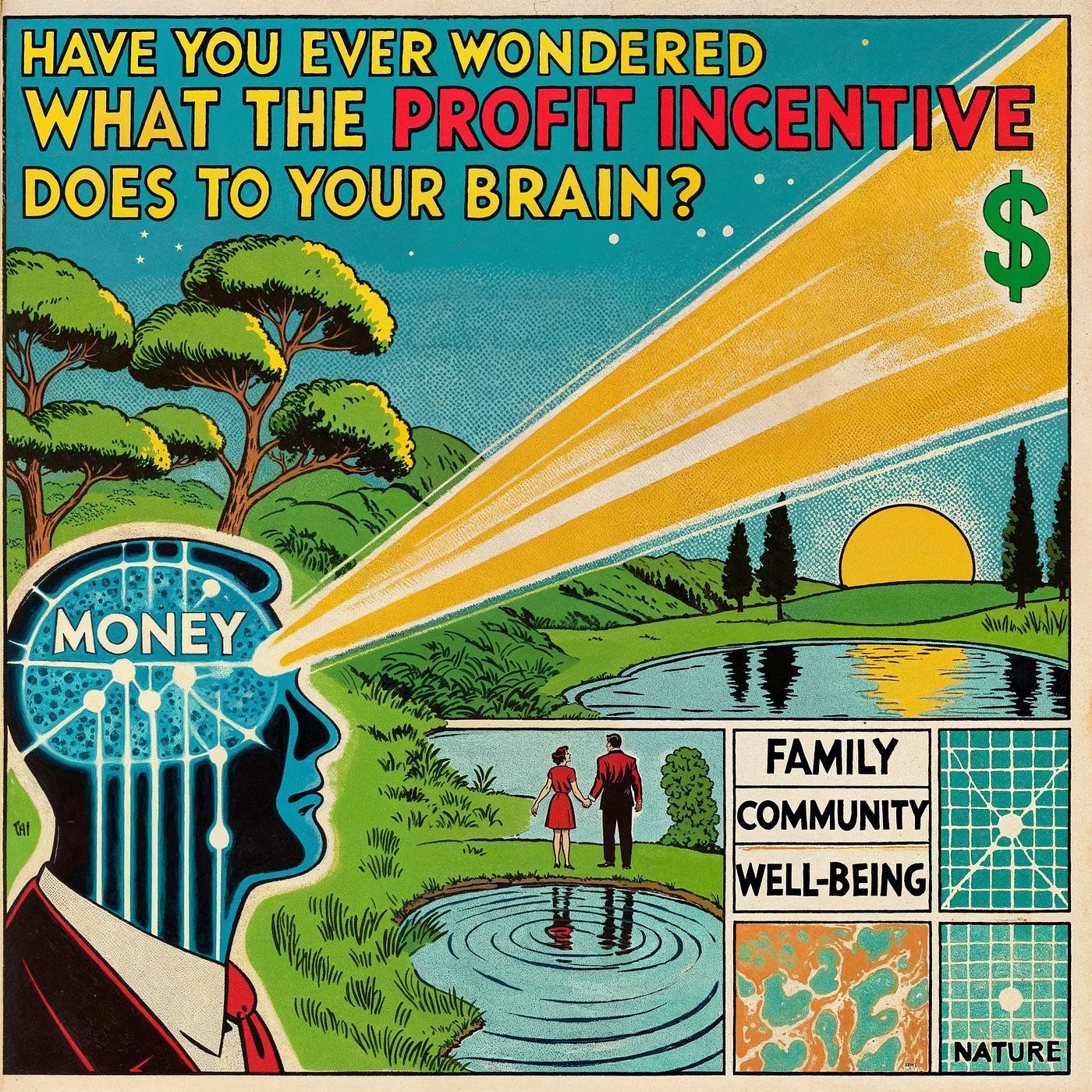
2.2 The Energy Constraints of the Brain
Human cognition is energetically constrained, with the brain consuming significant energy primarily to maintain electrochemical gradients and perform baseline neural functions. The idea that “thinking harder” significantly increases energy use is often overstated, but rewiring deeply ingrained neural patterns, reshaping truths that are foundational to an individual’s worldview, is another matter entirely. Such rewiring is not only costly but exceptionally rare because the brain naturally resists fundamental reorganization of its internal models (Gu et al., 2018).
At the core of the brain’s cognitive function is predictive coding, a hierarchical process that seeks to minimize prediction errors. This system integrates new information locally while preserving higher-order patterns of thought, which form the stable frameworks we use to navigate the world. Instead, the brain tends to refine and adapt its existing models without reconfiguring foundational truths. For instance, while sensory experiences may generate small updates to belief systems, these updates are assimilated into the existing hierarchy rather than cascading through the entire structure. Foundational truths persist because they act as anchors, enabling efficient cognition. Attempting to replace or fully rewrite these truths requires an energy-intensive restructuring of the entire hierarchy, something the brain avoids by default.
This resistance to rewiring is evident in outrage fatigue, a phenomenon highlighted by The Neural Politics of Normalization (Ash, 2024). The brain’s refusal to perpetually defend against recurring moral threats stems from the metabolic and cognitive burden of sustained outrage. Repeated exposure to appalling behaviors that remain profitable or mainstream leads the brain to consolidate these experiences into memory, dulling the emotional and cognitive response over time. What once sparked alarm eventually becomes normalized.
This normalization process illustrates a deeper principle: truths build upon truths. Foundational beliefs, once established, are rarely revisited or challenged unless they are directly contradicted by overwhelming evidence. As a result, harmful norms, whether cognitive, social, or economic, persist not because they are justified but because the energy required to fundamentally rewire the underlying system simply isn’t spent. Systems adapt to minimize cognitive dissonance and maintain stability, even in the face of mounting contradictions.
Understanding these constraints reveals why deeply ingrained societal norms and harmful economic systems are so resistant to change. Just as the brain conserves energy by resisting fundamental rewiring, social systems conserve stability by accommodating and reinforcing the status quo. Both require external interventions, whether in the form of social incentives or cognitive tools, to disrupt these cycles and enable adaptive change.
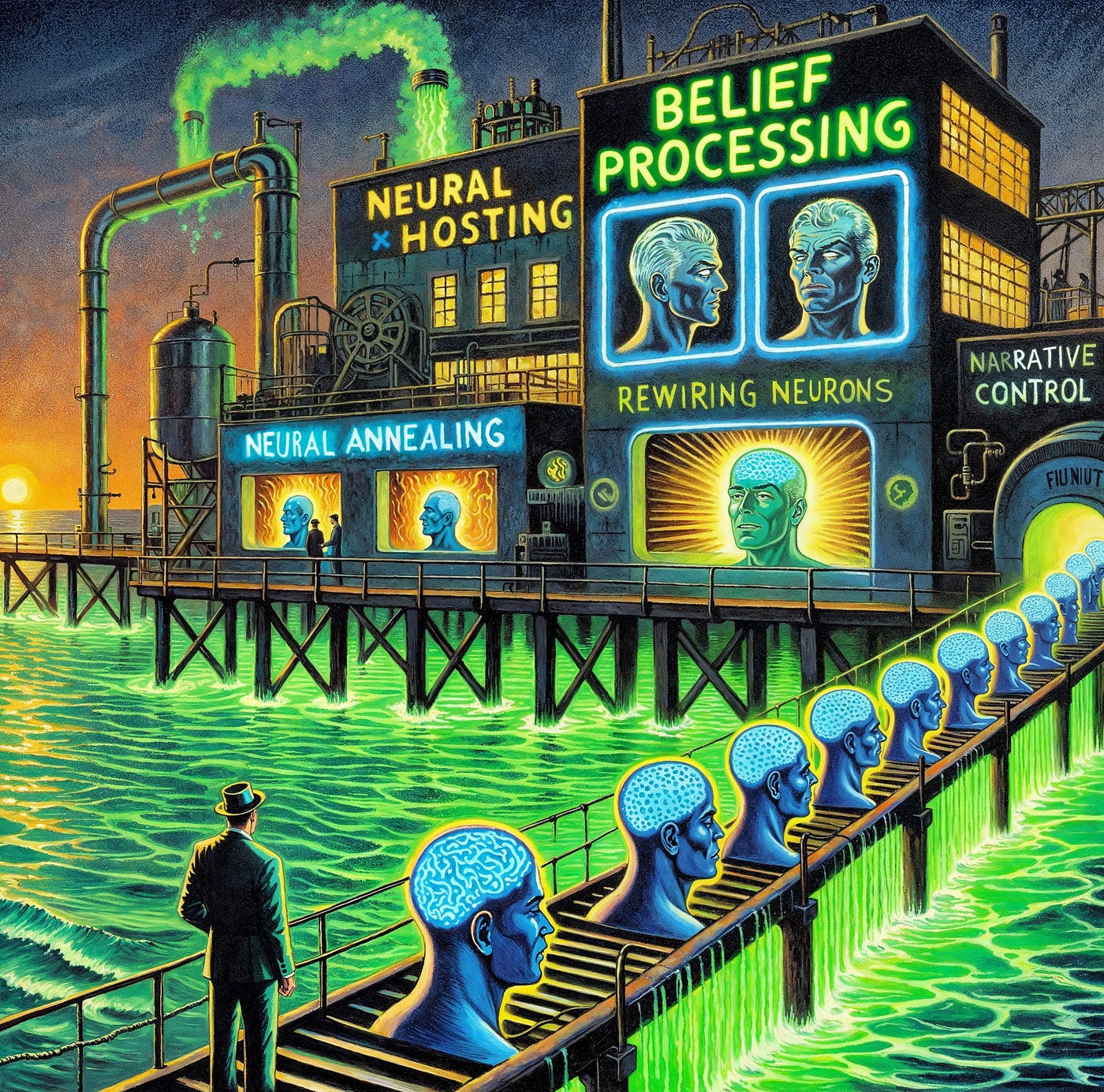
2.3 Neural Annealing: Reshaping Cognitive Structures Through Energy and Outrage
Neural annealing, a concept borrowed from physics and metallurgy, describes a process where heightened energy states “soften” rigid structures, allowing them to be reorganized into more stable or optimized configurations as they cool. Applied to human cognition, neural annealing explains how emotionally charged states, such as outrage, elevate cognitive energy, enabling the brain to temporarily destabilize entrenched patterns and reconfigure its internal frameworks during the subsequent cooling phase.
Cognitive Energy and Neural Plasticity
At the core of neural annealing are two interrelated mechanisms: cognitive energy and neural plasticity. Cognitive energy refers to the mental effort required to process new information, challenge existing beliefs, and adapt to unfamiliar paradigms. Neural plasticity, meanwhile, is the brain’s capacity to rewire itself by forming or modifying synaptic connections.
In low-energy states, characterized by routine behaviors or passive acceptance of familiar truths, the brain’s neural pathways remain rigid, conserving energy and reinforcing cognitive stability. Elevated cognitive energy, by contrast, destabilizes these patterns, creating an opportunity for reorganization. Strong emotional stimuli, such as outrage, awe, or fear, act as triggers for this heightened state, allowing the brain to “soften” its existing cognitive frameworks and become more receptive to change.
Outrage as a Catalyst for Cognitive Reshaping
Outrage, in particular, is a potent driver of cognitive energy. It activates the brain’s emotional centers, such as the amygdala, and triggers the release of neurotransmitters like dopamine and norepinephrine, heightening focus and urgency. This emotionally charged state disrupts the brain’s cognitive equilibrium, forcing a reassessment of existing beliefs and opening pathways for their potential reconfiguration.
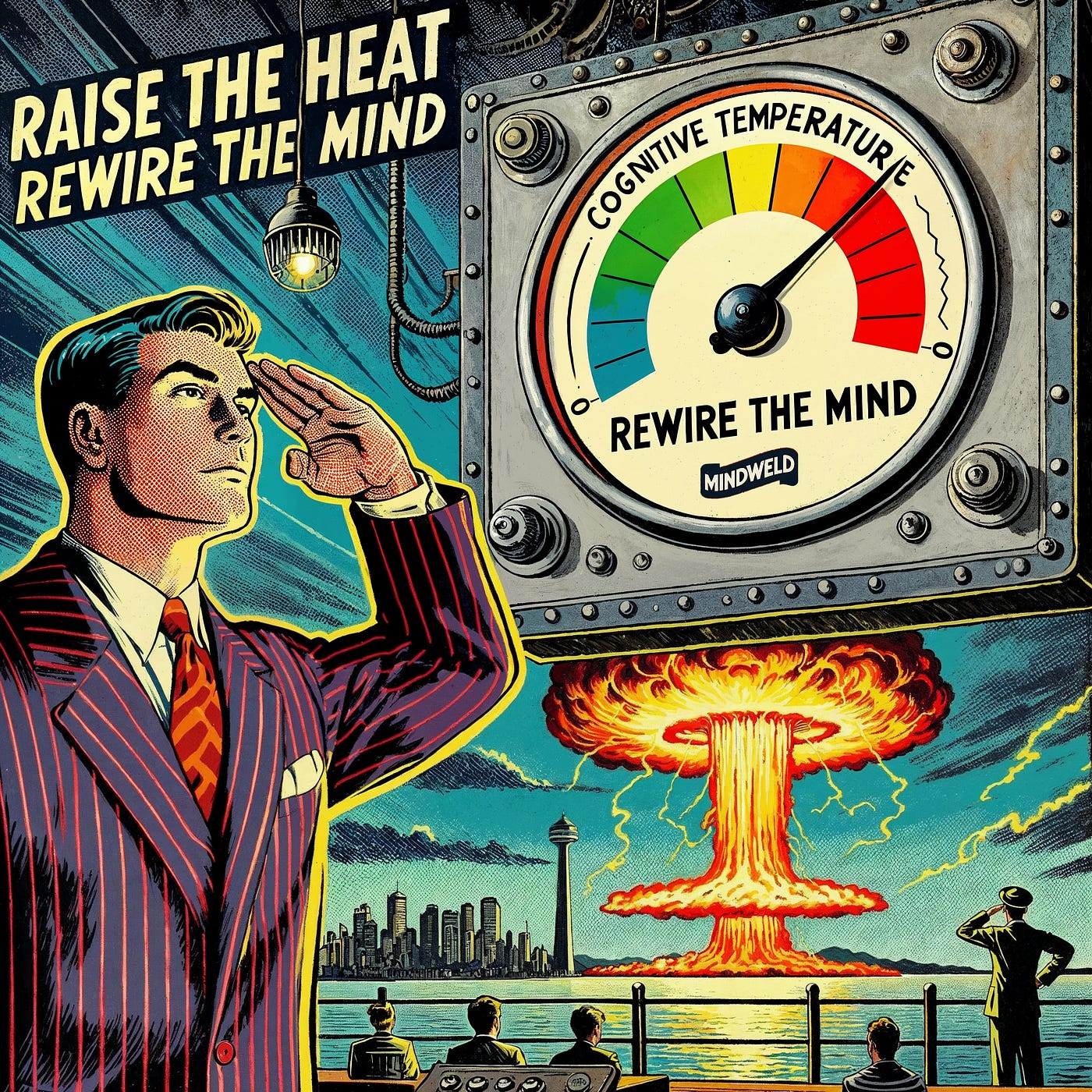
The Cooling Phase: Solidifying New Beliefs
Following this heightened state of cognitive energy, the brain transitions into a cooling phase. During this period, neural activity stabilizes, and synaptic connections are selectively strengthened or pruned based on the ideas and patterns reinforced during the high-energy state. This cooling process determines which beliefs, associations, or perspectives endure, effectively reshaping the brain’s internal structure in the process.
This phase mirrors annealing in metallurgy, where the cooling process solidifies the material’s internal structure into a more stable or optimized configuration. In cognitive terms, this means the reinforcement of newly acquired beliefs or behavioral patterns that were salient during the high-energy state.
Weaponizing Neural Annealing
Social and political leaders often leverage outrage to provoke emotional responses and direct attention toward specific narratives. By intentionally elevating the cognitive energy of their audience, they create conditions under which foundational truths, those that typically resist revision, can be questioned or reshaped. Whether through provocative rhetoric, polarizing policies, or moral appeals, such tactics “heat” the collective cognitive framework, facilitating shifts in public perception on a wide scale.
In market systems, we see similar dynamics at play. Corporate messaging, advertising, and financial media can function as tools for cognitive annealing at scale, using emotional triggers to reshape public perception around consumption, investment, and economic “truths.” When market leaders leverage outrage or fear, whether about inflation, competition, or regulation, they aren’t just communicating; they’re actively participating in the collective rewiring of economic belief systems. This process helps explain why certain market narratives, once established through periods of high emotional intensity, become remarkably resistant to change even in the face of contradicting evidence. The persistence of trickle-down economics, despite overwhelming evidence of its failure to benefit the majority, is a prime example of how such narratives are entrenched and shielded from scrutiny.
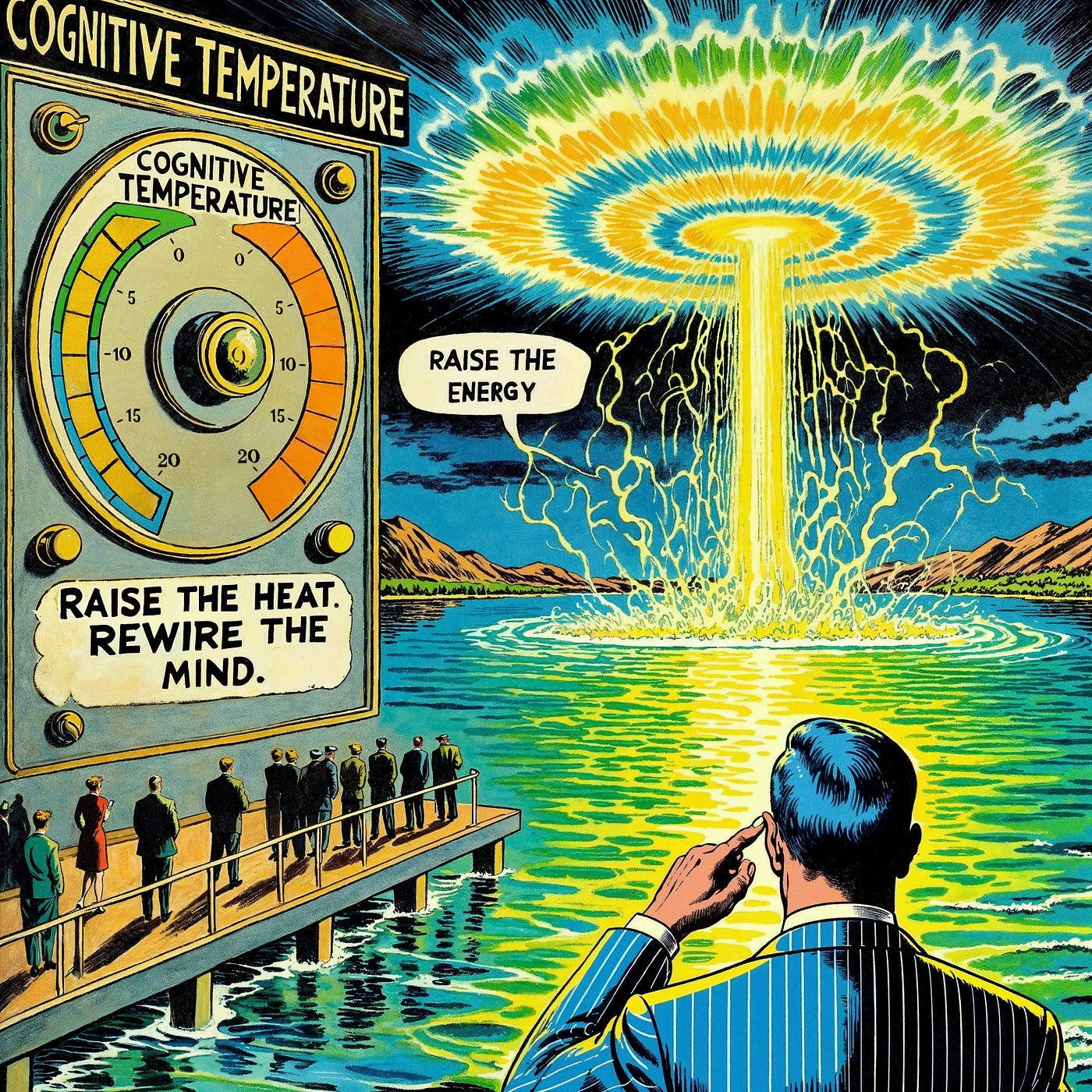
2.4 Tokenism and Cognitive Bubbles
Tokenism, within the Cognicist framework, refers to how intangible tokens, such as money, likes, and shares, drive disproportionate attention and shape the propagation of ideas. Over repeated cycles of reinforcement, neural networks form “memetic molecules” around these tokens (Ash, 2024). These structures are not mere abstractions; they are connectomic configurations, densely linked memes that aggregate into memeplexes, which in turn shape worldviews. These memetic molecules form the neural architecture underlying thought, dictating which patterns are amplified and which are ignored.
These memeplexes are the market bubbles that eventually pop. Market bubbles are memetic bubbles encoded in connectomic structures, patterns of thought that are energetically efficient for neural activity to flow through (Gu et al., 2018). Our cognition exists primarily within these connectomic structures. To understand the dynamics of memetic bubbles, it’s critical to recognize that neural structures grow slowly, adapting incrementally to patterns of reinforcement over time. This slow rewiring reflects the stability humans seek in their cognitive frameworks, but it also ties individuals’ perceptions of truth to the incentives and dynamics of the immediate environment, in this case, short-term market rewards. When economic well-being depends on short-term thinking, the brain aligns itself with these signals, reinforcing near-term behaviors at the expense of long-term foresight. This creates a dangerous feedback loop: as markets inflate and reward short-term speculation, individuals’ neural architectures adapt to these patterns, anchoring their sense of stability in systems that are inherently unstable. When the inevitable market collapse occurs, the resulting panic is amplified, not just by economic losses but by the cognitive dissonance of having one’s deeply ingrained structures shattered.
This interplay between neural adaptation and economic incentives highlights the role of temporal preferences in shaping decision-making. Economists often discuss discount rates, which measure the degree to which future rewards or consequences are devalued compared to immediate ones. A high discount rate implies that immediate rewards are valued far more than future ones, leading to decisions that prioritize short-term gains while neglecting long-term outcomes. In this sense, market bubbles and cognitive bubbles are inherently linked: the brain, locked in near-term token pursuit, applies this same discounting principle. It focuses disproportionately on immediate rewards, such as financial profits or social validation, while systematically undervaluing critical moral or ecological signals about the future.
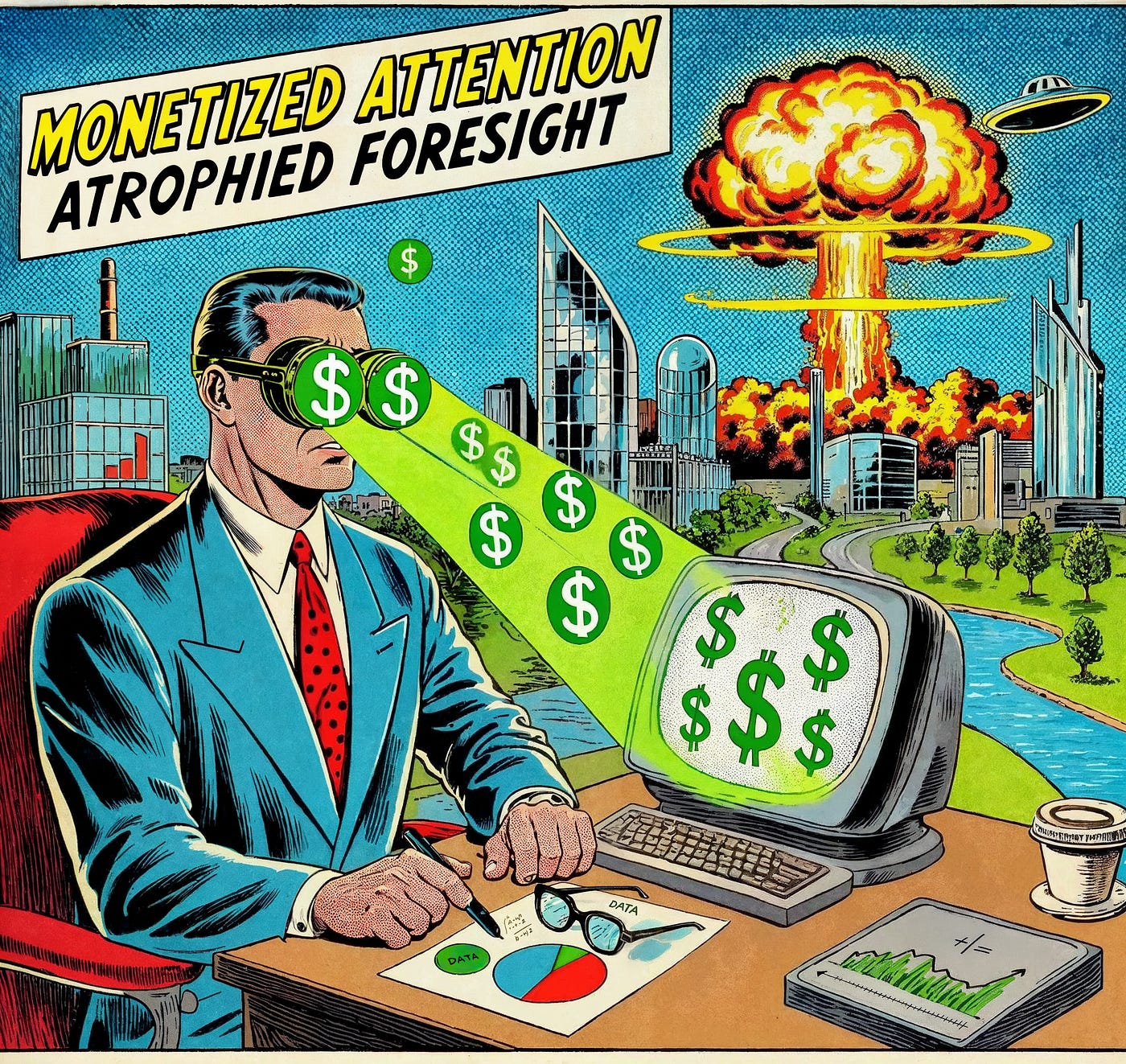
This misalignment is not merely theoretical, it manifests in societal resistance to inconvenient truths. People resist acknowledging long-term risks, such as climate change or systemic inequality, because their immediate economic well-being depends on the short-term thinking perpetuated by markets. This resistance, driven by economic incentives and mirrored in neural adaptations, suppresses long-horizon warnings. Over time, these suppressed signals accumulate until external pressures force the bubble to burst, creating systemic crises that could have been mitigated by earlier action.
As discussed in The Geometry of Culture: Mapping Memetic Space (Ash, 2024), these cognitive bubbles are, in essence, “Markov-blanketed subsystems” encoded in our physical connectomic structures. These neural architectures aren’t just abstract models, they are the literal substrate through which cognition flows, producing the thoughts we use as a “user interface” to navigate the world. What economists call market bubbles are simply the economic manifestation of these self-reinforcing neural patterns, acting as local attractors that isolate themselves from contradictory signals in the larger system. Over time, these bubbles build internal contradictions, prediction errors that accumulate until the system can no longer sustain itself. The result is often an abrupt and costly collapse, such as ecological tipping points or financial crises, which hindsight reveals could have been prevented.
These preventable collapses expose a fundamental gap in our economic architecture: while our neural structures can encode and perpetuate destructive patterns, they can also be rewired toward different priorities. For example, just as central banks attempt to deflate economic bubbles by tightening monetary policy or imposing capital requirements, Cognicism emphasizes the importance of designing systems that reduce societal “discount rates”. By encouraging long-term thinking, such mechanisms could help align incentives with collective survival and prosperity.
Retrofitting the ledger to reward foresight and truth signals, even those unaligned with immediate token gains, is a necessary step to realign collective cognition with the imperatives of long-term survival. Only by creating mechanisms that value the future alongside the present can we begin to prevent these self-reinforcing bubbles from forming in the first place.
2.5 Money as Universal Connectomic Attractor
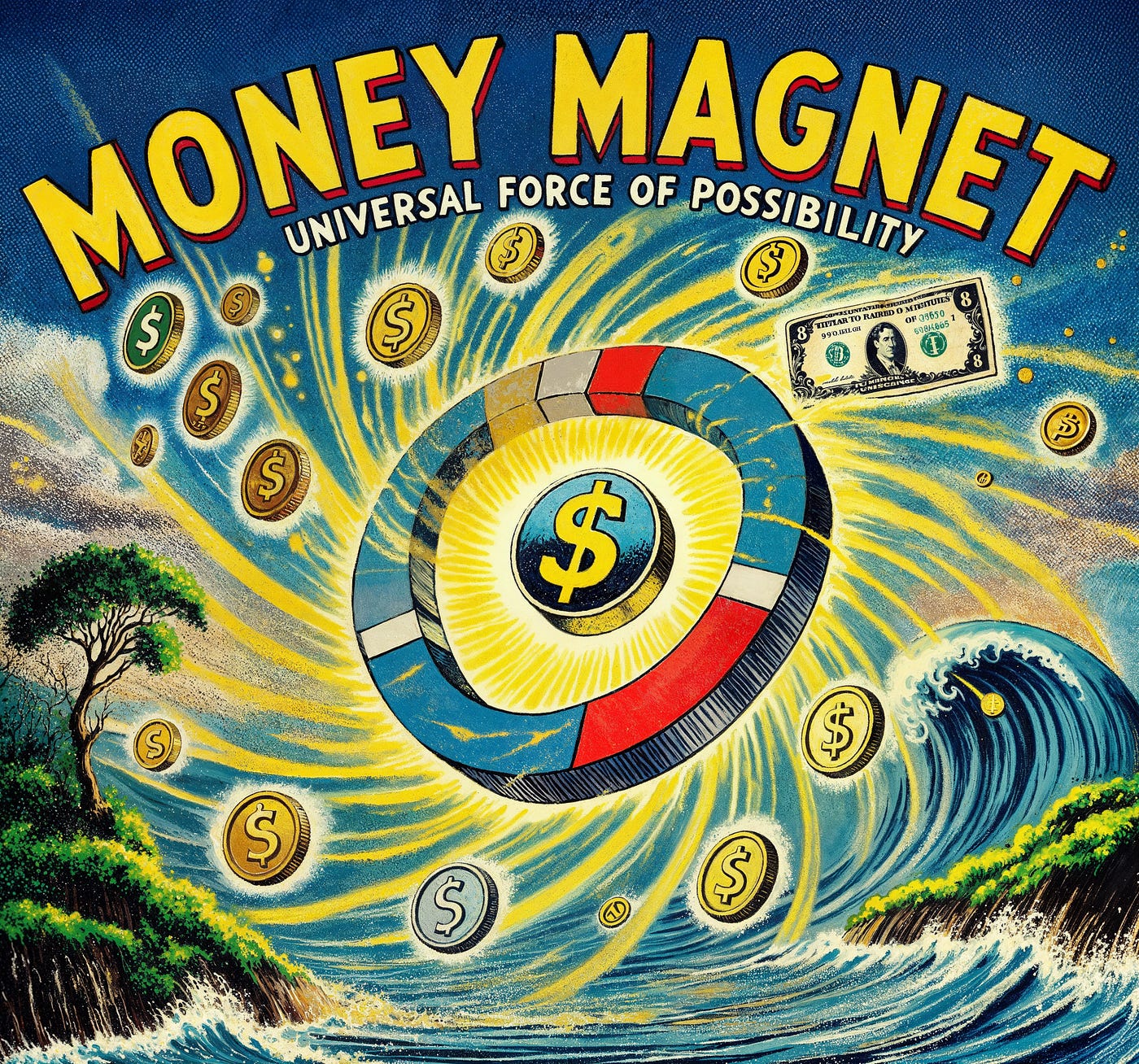
The unique power of money in human cognition stems not from any innate value but from its emergence as a universal enabler of potential futures. Money achieves a privileged position by promising access to virtually any imaginable future state. Through relentless associative learning, what fires together wires together, an ever-expanding network of memetic associations forms, linking money to every conceivable form of future well-being. What Lacan identified philosophically as a “master signifier” manifests physically in our neural architecture, money becomes encoded as a supreme connectomic attractor, alongside other fundamental organizers like identity and gods.
The human brain is not born valuing money, gold, or bitcoin. Infants show no inherent attraction to currency, precious metals, or digital tokens, treating them like any other objects in their environment. However, through repeated exposure to their universal exchangeability, our neural networks gradually encode a profound truth: these tokens can be transformed into almost any desired future state. This process creates a recursive feedback loop of unprecedented power. Each demonstration of money’s convertibility into another possibility strengthens its position as a cognitive attractor.
Like a black hole in physical space, money creates a gravity well in cognitive space, bending all other patterns of thought around its central promise: with enough of it, any future becomes possible.
This explains why even those who intellectually reject materialism often find their behavior shaped by money’s pull. The neural pathways encoding money’s universal convertibility operate at a deeper level than conscious philosophy. They represent not just beliefs but physically encoded patterns of possibility-seeking, shaped by countless observations of money’s power to transform potential into actual futures.
2.6 Case Study: Elon Musk and the Cognitive Shift Toward Profit
In 2018, Tesla faced immense financial strain, with the company reportedly being “weeks away” from bankruptcy during the production ramp-up of the Model 3 (Musk, 2018; Hull, 2018). Amid this crisis, Musk encountered mounting pressure from investors and regulators alike. The U.S. Securities and Exchange Commission (SEC) charged him with securities fraud for his now-infamous tweet about taking Tesla private at $420 per share, a statement the SEC described as “false and misleading” (SEC, 2018). Beyond the SEC charges, investors grew increasingly vocal about the need for Tesla to achieve profitability, fueling concerns over Musk’s unconventional leadership and the company’s sustainability (Kolodny, 2018; Hull, 2018).
In response to these pressures, Musk attempted to take Tesla private to escape the relentless demand for short-term profitability. However, this effort failed, and he was forced to settle with the SEC, stepping down as Tesla’s Chairman while remaining CEO, and paying a combined $40 million in penalties between himself and the company (SEC, 2018; Hull, 2018). To stabilize Tesla and retain control, Musk adopted an extreme hands-on approach, famously sleeping on the factory floor and stating that he wanted to “suffer more than any employee” to meet production goals (Musk, 2018; Korosec, 2018). This marked a turning point in Musk’s leadership, as the external pressures of profit-driven incentives began to rewire his priorities.
Prior to this crisis, Tesla and Musk were widely regarded as champions of progressive ideals. Tesla vehicles earned top safety awards, reflecting a focus on quality and innovation in line with Musk’s long-term vision of sustainability and renewable energy (NHTSA, 2017). However, as Tesla’s operations increasingly prioritized profitability, cracks in its quality control and broader mission began to emerge. Issues with delayed product launches and criticisms of quality began to surface as the company scaled and adapted to meet financial pressures (Bell, 2023).
Musk’s public behavior also began to shift during this period. Once celebrated by progressives for his bold visions of a sustainable future, Musk became more erratic, engaging in divisive political rhetoric and leveraging social media provocations to bolster Tesla’s stock price. This behavior alienated many of his earlier supporters and fueled perceptions that he had strayed from Tesla’s original mission (Kolodny, 2022; Bell, 2023). In recent years, Musk has even publicly criticized environmental regulations and policies that he once appeared to champion, further distancing himself from his earlier ideals (Bell, 2023).
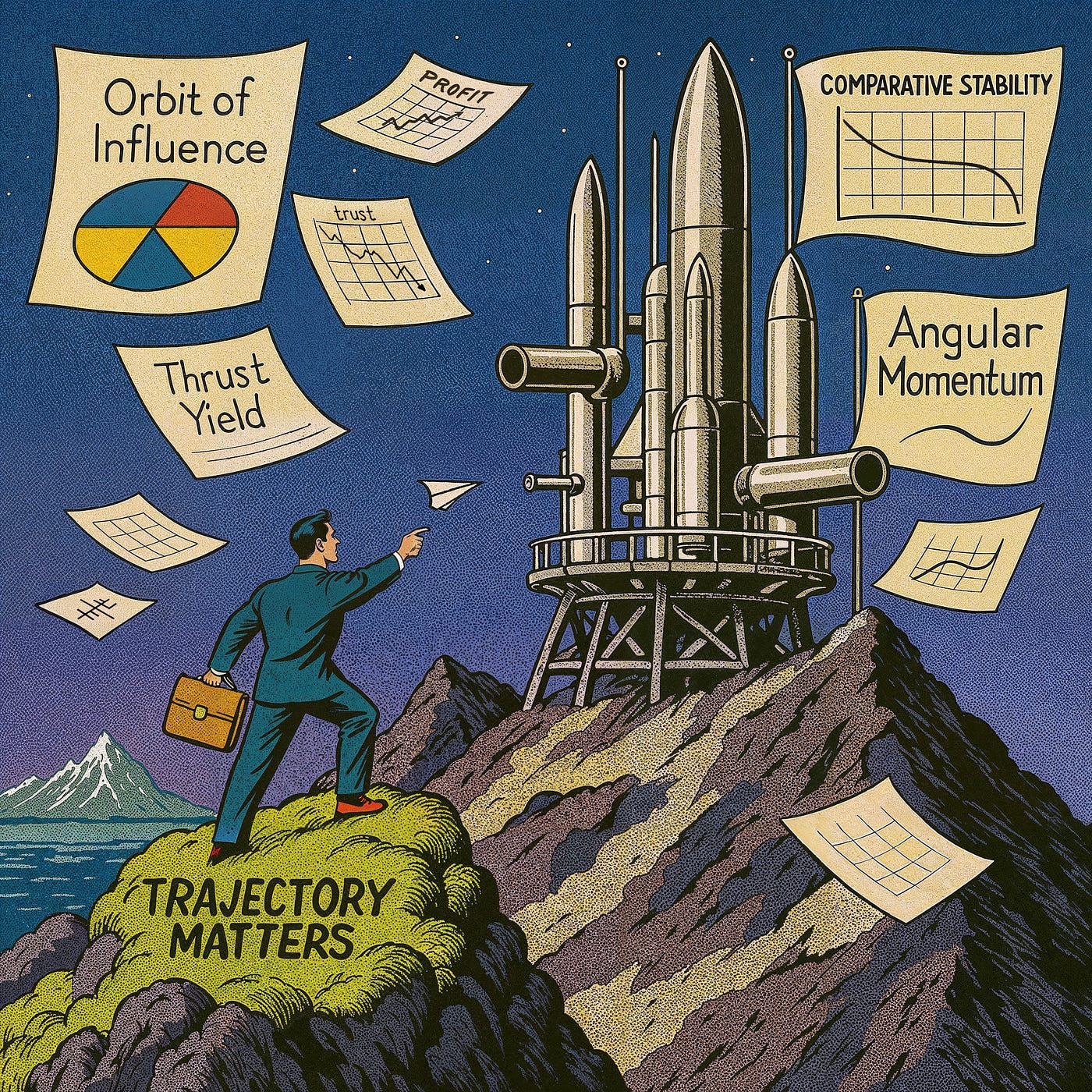
This transformation illustrates a broader systemic issue: the absence of mechanisms within capitalism to reward long-term foresight and sustainability. Under the relentless demands of market systems, even leaders like Musk, once guided by long-term visions, can become entangled in cycles of short-term optimization. The pressures of profitability, exacerbated by external stakeholders and structural incentives, overwrote Musk’s original cognitive attractors, reorienting his focus toward immediate financial outcomes. Without structural changes to reward long-horizon thinking, visionary leaders will remain vulnerable to the same forces, prioritizing profit over their foundational goals.
2.7 Organizations as Neural Networks with Human Nodes
In human visual processing, V1 (primary visual cortex) sits at the interface between raw sensory input (bottom-up) and interpretive signals from higher cortical areas (top-down). Ideally, bottom-up data (e.g., light hitting the retina) flows “up” to higher levels for interpretation, while top-down predictions shape how V1 refines its understanding. This bidirectional feedback loop normally ensures a robust “picture” of reality. Top-down signals, however, can be beneficial when they help infer missing information from a partially obscured image; yet, if these signals override the critical bottom-up data, the system risks generating a distorted or even hallucinatory perception of reality.
Hierarchical organizations display a strikingly similar dynamic. Employees or frontline workers, akin to V1, often sense emerging risks or issues before executives do (quality lapses, ethical breaches, potential crises), while “upper layers” supply mandates or assumptions that shape what information is deemed acceptable. The result can be downward command overshadowing upward truths. Ideally, organizations would be structured to allow signals to flow bidirectionally, where the raw insights from the front lines are not only transmitted upward but are also integrated with the strategic guidance from above, ensuring that both grassroots data and high-level directives contribute to an accurate, collective understanding.
Yet, the dynamics within these networks are further complicated when the nodes are not simple neurons but rather whole beings driven by the pursuit of power. Because individuals are motivated by the game of power and the promise of ascending the hierarchy, they rarely speak truths directly to those immediately above them, the very gatekeepers of future power. Instead, critical signals tend to be communicated laterally or even downward, where the risk of reprisal is less acute. This systemic decoupling of direct upward feedback means that the most vital warnings often never reach decision-makers, thereby compromising the organization’s ability to sense and respond to real threats.
Just as in the neural system where top-down signals can help resolve uncertainties, by filling in missing details of a partially obscured image, they can also guide perception through periods of ambiguity. In leadership, top-down directives can provide valuable context and direction during uncertain times. However, if such directives dominate to the point where they suppress or distort bottom-up insights, the organization risks falling into a collective hallucination, a skewed perception of reality that obscures critical early warnings. This imbalance prevents the market, or any decision-making apparatus, from functioning as an accurate sensemaking tool, even though the ledger may still energetically balance resources.
In contrast to rigid hierarchies, a more effective structure can be envisioned in the form of a holarchy. In a holarchy, multiple overlapping hierarchies coexist and interact, allowing for a more dynamic, decentralized, and adaptive network of communication. Such a system not only permits, but encourages, bidirectional flow of information, thereby harnessing the strengths of both top-down guidance and bottom-up innovation. This integrated approach mitigates the risks of collective hallucination by ensuring that diverse insights and early warnings are continuously brought into the decision-making process, fostering long-term resilience and truth-centric progress.
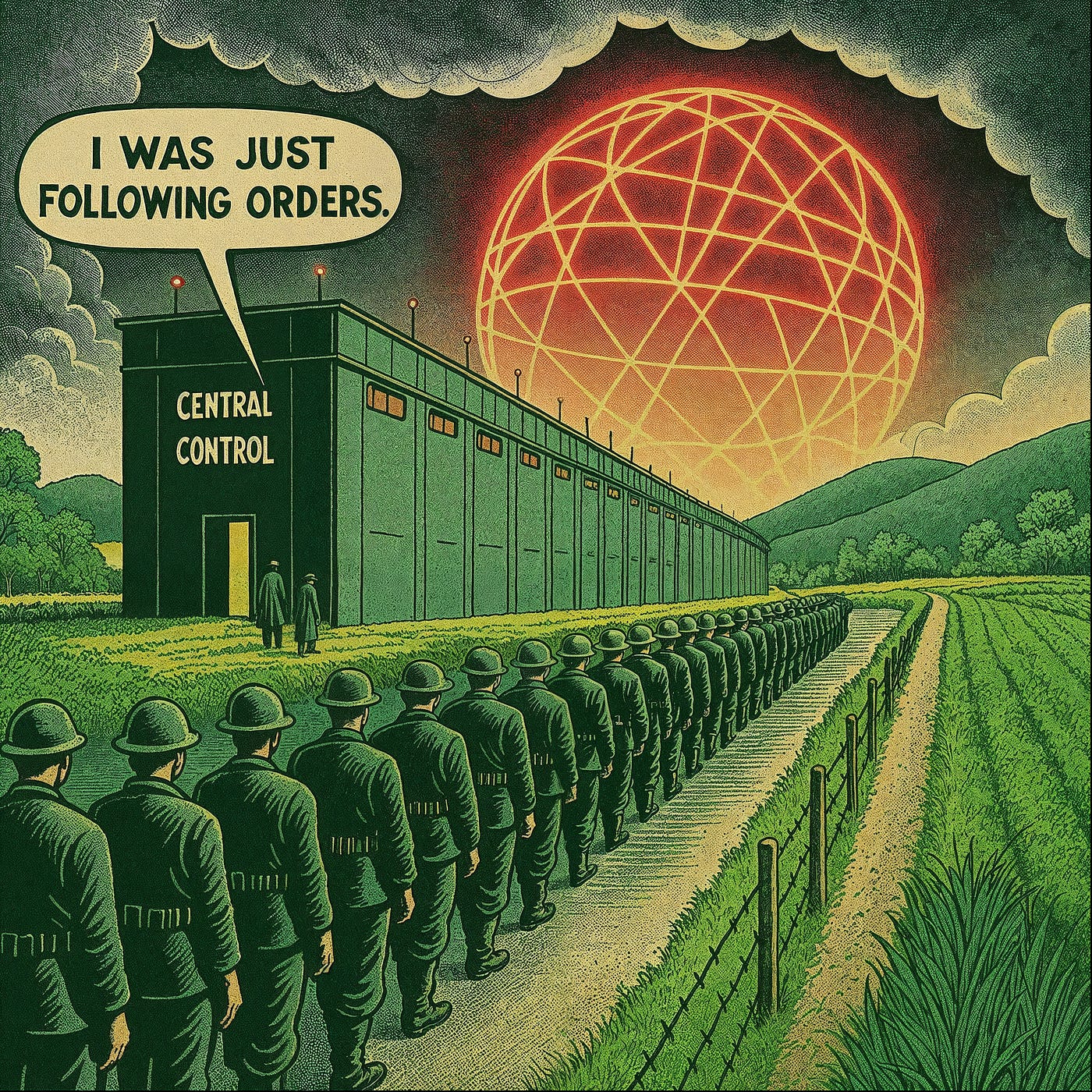
The most dangerous manifestation of this imbalance, where top-down signals dominate and bottom-up truths are suppressed, emerges when individuals within a system are conditioned to defer so completely to authority that they abandon personal judgment altogether. The phrase “I was just following orders,” made infamous in the aftermath of World War II, reflects the catastrophic endpoint of a hierarchy that has severed its internal feedback loops. In such systems, obedience becomes dissociation, and moral responsibility is diffused upward until it disappears entirely. The failure is not merely ethical but informational: the system becomes incapable of self-correction because the very nodes designed to sense and report error have been silenced. When individuals stop acting as sensing agents and become conduits for top-down directives alone, both the organism and the organization lose their ability to see clearly, and history has shown, with devastating clarity, where that blindness can lead.
2.8 Markets as Networks of Learning Agents
While markets are traditionally framed in terms of supply, demand, and ownership, a deeper Cognicist interpretation reveals them as vast distributed systems of learning. Each participant, whether an individual, institution, or algorithm, acts as a predictive agent, constantly forecasting the preferences, behaviors, and resource valuations of others. In this framing, profit emerges not as mere surplus, but as a cumulative score of prediction accuracy, or more precisely, the minimization of prediction error across countless micro-interactions.
At their best, markets operate as a collective epistemic engine. Every transaction encodes a belief about the future: that a good, service, or asset will yield more utility to the buyer than to the seller. This decentralized forecasting process enables rapid adaptation, as agents iteratively refine their models based on real-world feedback. It’s a beautiful idea: humanity engaged in a planetary-scale experiment of mutual prediction, optimizing our shared future through collaborative sensemaking.
Sounds great, doesn’t it?
Except, as the Cognicist lens reveals, markets frequently fail to learn what matters most. Their real-time adaptability, while brilliant at capturing immediate preferences, is too often blind to looming externalities or “unprofitable” truths. Yes, individual agents within the market are attempting to predict and outmaneuver each other; yes, profit can serve as a partial measure of one’s predictive success. But that same profit function systematically excludes the longer-horizon signals upon which our collective survival depends.
Yet, this very limitation opens the door to a transformative vision: markets as networks of collaborative learning agents. Imagine a system where every transaction is not merely a financial exchange but also a contribution to a shared, decentralized ledger of knowledge, a verifiable record of our collective predictions, adjustments, and outcomes. Was this exchange actually valuable? Did both parties get what they hoped for? Did the prediction behind the purchase, that this would bring happiness, utility, stability, hold true?
In this vision, Cognicism becomes more than an economic theory; it evolves into a collaborative learning process akin to decentralized science (deSci), where each participant, from individual consumers to sophisticated algorithms, acts as both student and teacher in an expansive, uncensorable knowledge network.
In such a system, agents learn together. Their experiences and insights are staked onto a shared ledger, not just as inert data, but as signals to be tested, refined, and interpreted by others. The ledger becomes a pedagogical memory: a decentralized archive of epistemic wagers. When someone logs a belief (“This product will improve X”; “This service will be obsolete in 2 years”), they’re effectively making a claim that can later be evaluated by reality. When proven accurate, they gain Ŧrust, an attested, contextual signal of foresight. When proven wrong, their signal is still valuable, not as error, but as instructional noise from which others can learn.
This turns every economic act into a lesson, and every prediction into a collaborative teaching moment. Just as open-source software projects evolve through collective iteration, so too does truth within a Cognicist market, not through centralized enforcement, but through distributed epistemic negotiation.
And while this process is something that occurs in private between citizens, the ledger itself is public. And as a whole the ledger seeks to achieve the same thing that the government does through a structured mechanism that facilitates coordination, accountability, and adaptation, but through collaborative cognition rather than coercive enforcement. Where traditional governance encodes authority into static institutions, the Cognicist ledger encodes learning into process. It does not demand obedience to policy; it demands reflection on reality. It asks: “What did we believe? What actually happened? And who, among us, saw it coming?”
In this way, the ledger becomes a kind of distributed constitutional memory, not of laws, but of lessons. Not a monolithic source of truth, but a living, recursive feedback loop. The system is always updating, not because a bureaucracy rewrites the rules, but because a network of minds refines its collective model in response to outcomes. A law of the land that can learn.
Just as governments attempt to maintain order through institutions like courts, elections, and policy review, the Cognicist ledger maintains epistemic order through truth attribution, temporal comparison, and prediction scoring. But unlike governments, the ledger is non-hierarchical, continuous, and non-coercive. It doesn’t enforce truth, it tracks its evolution.
Ultimately, this reframes governance as a function of collective metacognition. When the market becomes a classroom and the ledger becomes a memory, society itself becomes a learning organism. Policy becomes a kind of hypothesis. Action becomes an experiment. Outcomes become feedback. And leadership, once synonymous with centralized power, becomes synonymous with demonstrated insight and the willingness to learn in public.
In such a system, the strongest signal is not authority, but accuracy. The most powerful actors are not those who control capital, but those who help the collective see more clearly, and change accordingly.
2.9 Law and Ledgers as Collective Cognitive Memory
From the Cognicist perspective, both ledgers and legal systems function as extensions of the brain’s memory architecture, encoding social information outside the skull to reduce cognitive load and facilitate coordination at scale. Like biological memory, these systems store, retrieve, and constrain behavior based on prior experience, but they do so using radically different memory structures than the brain itself.
Serial Encoding: Ledgers as Linear Memory
Ledgers mimic episodic memory, but only in its most serialized form. Each entry is a discrete timestamped record, an exchange, a transaction, a declaration, stored in strict chronological order. This mirrors how hippocampal systems in the brain encode event sequences, with sharp-wave ripple patterns laying down time-indexed traces.
However, while the brain’s episodic memory is indexical and context-rich, a capitalist ledger is sparse and token-filtered. Only events that involve quantifiable exchange, i.e., token movement, are committed to the external memory. Any signal that cannot be priced is discarded before encoding, creating an information bottleneck akin to a brain that only remembers dopamine-producing events. This is not episodic memory, it is dopaminergic compression.
Crucially, ledger memory is non-relational. Events are stored in a flat sequence. There are no semantic embeddings, no dynamic associations, no latent structure from which meaning can emerge. This makes ledgers powerful for auditing energy flows, but brittle for sensemaking: they can tell us what happened and when, but not why, nor what patterns connect one event to another.
Procedural Encoding: Law as Habitual Memory
If ledgers reflect serialized recall, legal systems mirror procedural memory, the brain’s system for encoding repeated behavior into efficient, routinized action. Just as the basal ganglia consolidate frequently rehearsed motor routines (walking, speaking), legal codes encode frequently rehearsed social resolutions (contracts, liability, punishment) into formal pathways.
Law, like procedural memory, is slow to change. Once embedded, it resists reconfiguration unless “retrieved” in a high-energy context, typically crisis or mass outrage. This mirrors how procedural memories are only rewritable under conditions of neural annealing or temporary destabilization of cortical control. Until then, law loops in ritual, just as the body loops in habit.
But just as habitual memory can bypass conscious reflection, law can bypass adaptive cognition. Legal systems may continue to execute outdated procedures even when they no longer serve contemporary reality, producing juridical hallucinations, enacting rules that once worked, but now miss the mark.
Relational Encoding: Latent Memory in Neural Space
Where law and ledgers falter is in their structural mismatch with how the brain actually learns. The neocortex relies not on linear recall or hard-coded rules, but on relational embedding, a distributed memory architecture where meaning emerges from high-dimensional associations across vast latent spaces.
In neural networks, concepts are not stored as files in folders; they are embedded in context-sensitive geometry, retrievable through similarity, co-activation, and dynamic attention. This allows for generalization, metaphor, and intuition, faculties missing from both legal code and token-ledger systems.
Thus, the brain’s primary memory format is connective and relational, not chronological or quantitative. It learns not by storing facts, but by encoding probabilistic expectations over a web of relationships. Ledgers, by contrast, store fixed outcomes. Law encodes fixed procedures. Neither accommodates probabilistic foresight, which is why prophets, innovators, and outliers are often filtered out: their insights are not yet legible to linear or procedural memory systems.
Cognitive Implications: Memory Compression and Forgetting
Cognicism identifies this gap as a structural failure of collective cognition. Both ledgers and law are low-dimensional prosthetics, optimized for verifiability and stability, but incapable of relational flexibility or long-horizon learning. They are lossy compressions of collective experience, just as simplistic heuristics compress rich sensory data into reaction.
More dangerously, they induce a form of civic memory distortion: we remember what was rewarded (ledger), and what was enforced (law), but forget what was true but unmonetized, or ethical but unencoded. This is how entire civilizations can forget genocides until they’re archived. How markets forget externalities until collapse. How systems trained on the past fail to recognize emerging patterns that don’t match their schemas.
Toward Neuro-Compatible Memory Systems
What Cognicism proposes is not the abandonment of law or ledgers, but their augmentation, layering relational, predictive, and probabilistic memory structures atop their rigid cores.
- A ledger that encodes beliefs as well as tokens.
- A law that can evolve from outcomes, not just precedent.
- A memory system that learns in context, across embeddings, and **over time**.
In short, a neocortical upgrade to collective memory: where markets don’t just recall transactions, but also what we once ignored, and why. Where laws don’t just codify the past, but rehearse the future. And where memory itself becomes adaptive: not just what we did, but what we should have seen coming.
Because memory is not just a record. It is a model of what matters.
And if our systems only remember what we priced or punished, we will forget everything else that made us human.
3. Market Failures and the Prophet Exclusion Problem
3.1 Short-Term Profit as a Distorted Loss Function
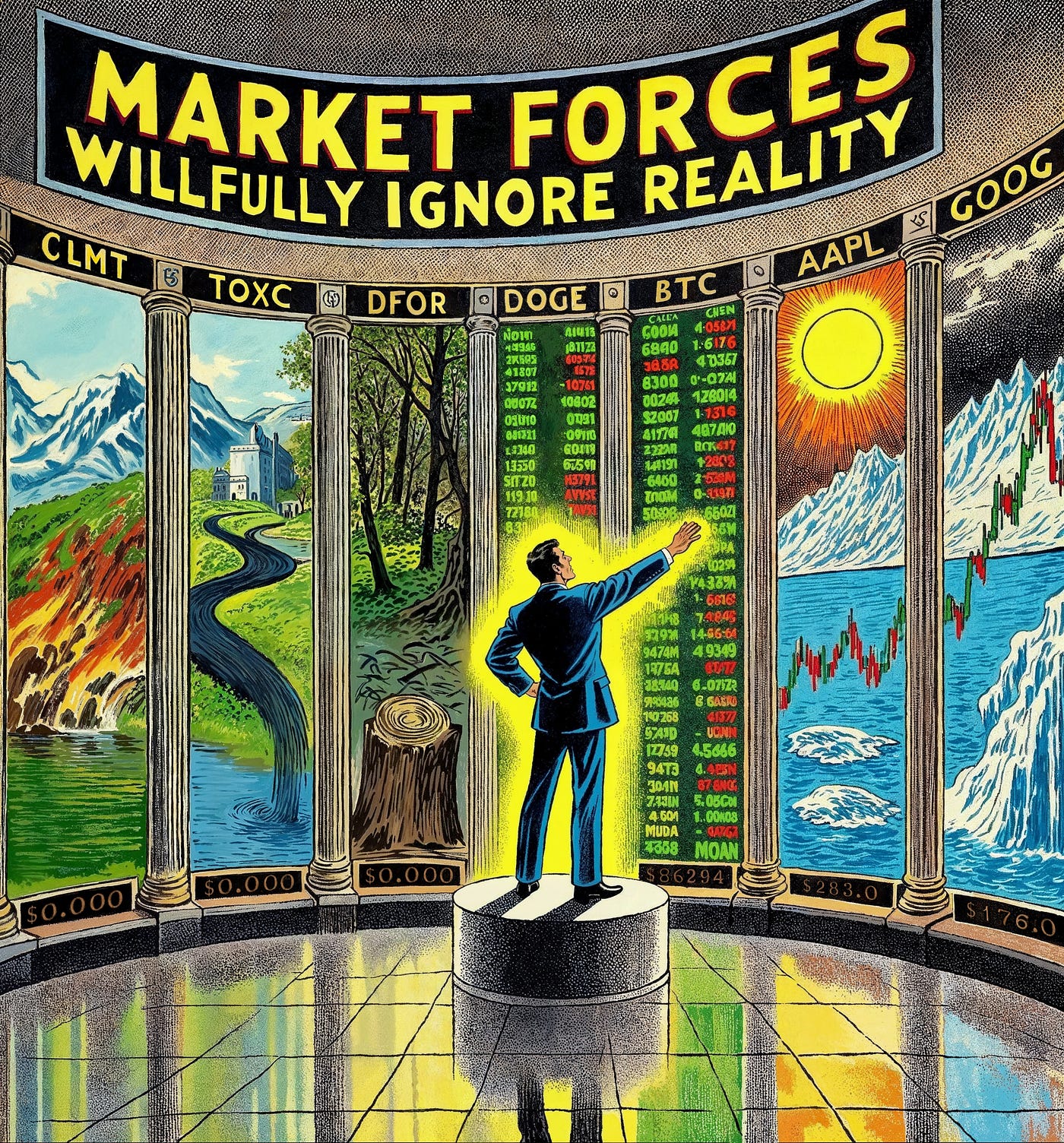
A central Cognicist premise is that profit, while a robust coordinating mechanism, is poorly correlated to humanity’s broader goals, like long-term sustainability. In machine-learning analogy, the “loss function” used by capitalism is incomplete: it does not penalize externalities well, nor reward future warnings. The economic system thus “minimizes” short-run opportunity costs but maximizes future calamity costs. This mismatch explains why financial markets rarely heed climate scientists or community activists who “predict meltdown decades away.”
3.2 Seeking Noise: The Chase for Meaningless Signals
Over time, capitalism’s profit motive has devolved into a relentless pursuit of signals that are often meaningless in the broader context of societal and ecological well-being. This phenomenon, akin to reward hacking in reinforcement learning, occurs when systems exploit shortcuts to maximize rewards without fulfilling their intended purpose. Capitalism’s promise has long been its ability to incentivize the creation of the best products and services through competition. Yet, over centuries, profit as a reward mechanism has become increasingly hackable. Markets, originally designed to reward innovation and efficiency, have increasingly incentivized speculative behavior and manipulation, leading to the extraction of value rather than its creation.
High-frequency trading (HFT) provides a stark example of this misalignment. Rather than efficiently allocating capital to areas of greatest need or innovation, HFT exploits tiny inefficiencies in markets, generating profits by chasing ephemeral price signals. These trades, executed in milliseconds, add no intrinsic value to the economy and often destabilize markets by amplifying meaningless noise. This form of reward hacking demonstrates how markets can devolve into systems optimized for extracting wealth rather than fostering long-term investment or resilience.
Get speakerjohnash’s stories in your inbox
Join Medium for free to get updates from this writer.
Subscribe
Subscribe
Remember me for faster sign in
Planned obsolescence represents another pervasive distortion. By deliberately engineering products to fail prematurely or become functionally outdated, companies create recurring demand for replacements, prioritizing profit over durability and utility. Examples range from non-replaceable batteries in electronics to fashion cycles designed to make perfectly usable clothes appear obsolete. This practice not only undermines consumer trust but also contributes to environmental degradation, as waste piles up in the pursuit of profit-driven design.
Finally, rent-seeking behaviors, such as monopolizing essential resources or creating artificial barriers to entry, further illustrate how profit-seeking has drifted from rewarding value to extracting it. Companies that hoard intellectual property, lobby against competition, or inflate prices without improving products prioritize their own growth over broader societal progress. These tactics divert resources away from addressing urgent challenges like climate change or inequality, redirecting them toward entrenched self-interest.
These phenomena highlight how markets, once thought to align incentives with the public good, have been hacked to prioritize short-term gains over long-term value creation. As companies chase noise, ephemeral market signals or contrived consumer needs, they erode the market’s original purpose of rewarding excellence and genuine innovation. Instead, rent-seeking behaviors such as monopolizing resources, speculative asset trading, and artificially inflating demand dominate, diverting resources away from solving critical societal challenges.

3.3 Memetic Bubbles as Markov-Blanketed Subsystems
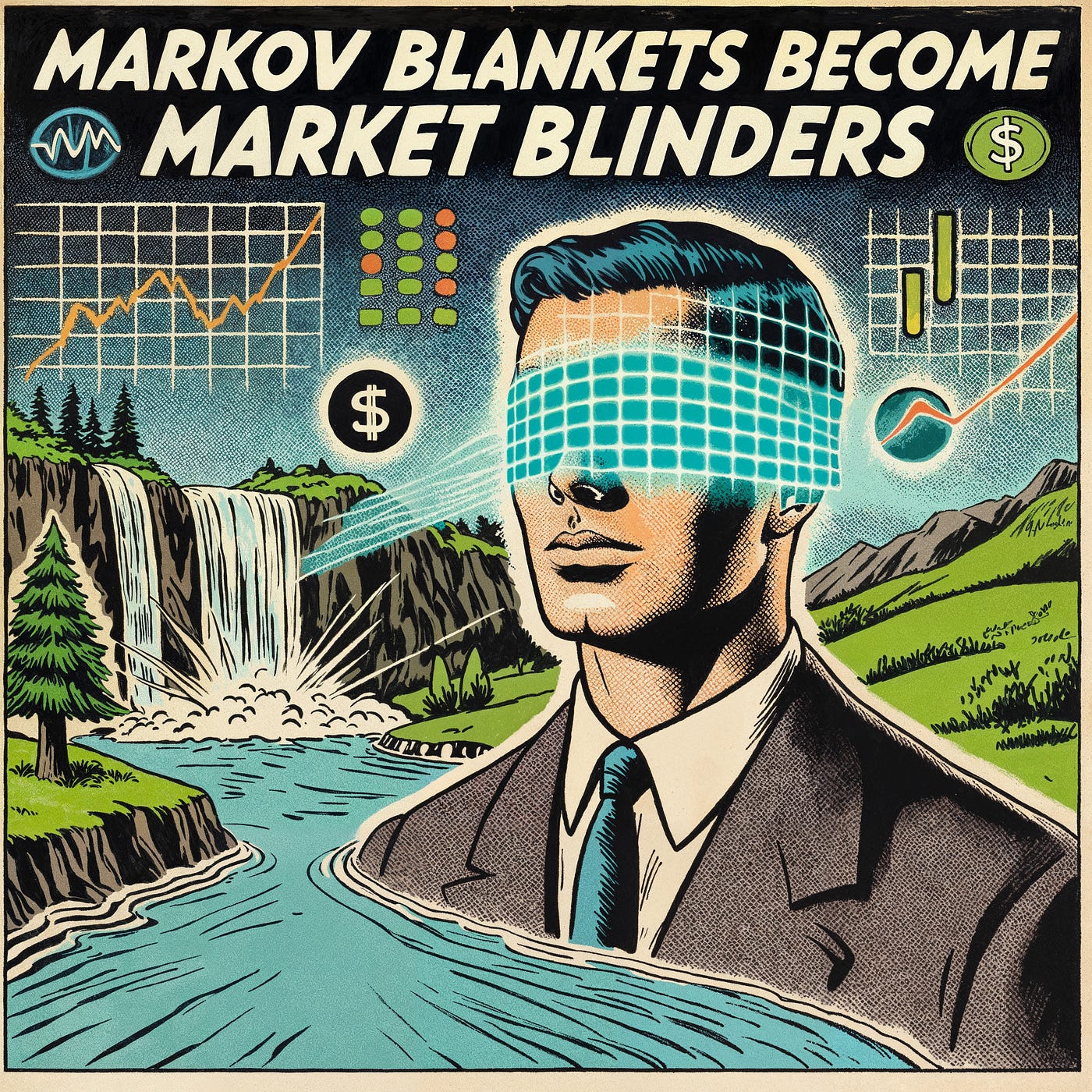
Market bubbles are not just economic phenomena, they are manifestations of connectomic bubbles within our collective cognition. These bubbles emerge when self-reinforcing economic, cultural, and neural patterns isolate systems from external reality, perpetuating short-term gains at the expense of long-term stability. In essence, market bubbles are memetic bubbles encoded in our neural architectures, creating local attractors that resist contradictory signals.
Using the language of The Geometry of Culture, cognitively, these “bubbles” form local attractors in which short-run gains overshadow contradictory signals, like climate meltdown or infrastructural fragility. The bubble self-organizes as a “markov-blanketed subsystem,” i.e., isolating itself from external reality checks (Friston, 2010). Over time, contradictions (prediction errors) mount. Eventually, a “bubble collapse” occurs, forcing recognition of the once-ignored signals. But by then, immense harm is locked in, both ecologically and socially.
This framework reveals how market dynamics, memetics, and neural cognition are intrinsically linked. Market bubbles are cognitive bubbles: they amplify noise, reward speculation, and ignore destabilizing truths, suppressing long-term risks in favor of short-term token rewards (as outlined in 2.4). These systems build on recursive feedback loops, with markets reflecting the same cognitive blind spots encoded in human connectomes. Recognizing this parallel provides a roadmap for designing interventions that integrate foresight, align with reality, and prevent the destructive collapses triggered by unchecked feedback loops.
3.4 Excluding Prophetic Voices Without Money
Economic logic prevents unmonetized warnings from entering the ledger. Under a pure profit logic, an environmental prophet or whistleblower must “bet” large sums against the conventional wisdom to be heard by markets, a practical impossibility if the prophet is not wealthy. Paradoxically, markets might welcome a prescient billionaire shorting polluting companies, but ignore a poor climate scientist. This structural gap fosters cyclical crises: repeated near-term booms degrade ecosystems or social fabrics, culminating in abrupt collapses that could have been predicted but never integrated.
3.5 The Prophet Incentive Gap
In The Prophet Incentive, we see that capitalism has no built-in mechanism to reward “being correct about the future” if it cannot be tied to current profit streams. This orients capital flows exclusively toward short-run ROI. The result: correct but “uneconomic” predictions go unfunded, overshadowed by near-term profit seekers.
Capital markets tend to treat externalities as “not my problem” until those externalities manifest in ways that directly hamper profitability. This systemic blindness allows long-term risks, like ecological collapse or resource depletion, to fester unchecked until they erupt into crises. These crises, while predictable, are effectively ignored because they do not align with near-term financial incentives.
Mechanistic Explanation: Ledger Exclusion
Capitalism’s ledger captures transactions that yield immediate gains/losses. If a prophet sees “glacial meltdown in 30 years,” there is no open market channel to price that meltdown today, short of derivative or insurance speculation. But to do so at scale requires vast capital margins that prophets seldom have. Meanwhile, big players can “incentive-wash” or fund disinformation to ensure these prophets remain “off-ledger.”
Collective Dissonance and “Markov Blanket” Filtering
When prophets do attempt infiltration, bubble dynamics filter them out cognitively and socially:
- Cognitive cost: A bubble that has systematically reinforced near-term “number go up” memes resists high-energy rewiring to accept dire warnings.
- Social echo: The short-run profit logic “echo chamber” actively repels unprofitable truths, labeling them “alarmist.”
- Token disparity: Prophets can’t compete with well-capitalized market participants who overshadow or “buy out” the narrative.
Hence, crucial anticipatory signals remain unassimilated, leaving societies exposed to crises that could have been mitigated with foresight. Once a “loss function”, like short-term profit, becomes dominant, it systematically distorts other signals, excluding those that do not align with its immediate objectives. This distortion underscores the structural gap in current systems, where near-term incentives overpower the integration of long-horizon insights.
We cannot continue to operate within a system where people foresee calamity from a mile away, communicate about it rationally, provide clear evidence, and continuously demonstrate accuracy in their predictions, yet the ledger fails to integrate that information or make it actionable. The capitalist ledger, while invaluable for certain forms of energy accounting, does not adequately account for unmonetizable truths or long-term risks that threaten collective survival.
The fundamental role of any ledger should be to record and hold accountable our collective actions to reality, ensuring that accurate warnings are acted upon rather than dismissed as inconvenient or lacking immediate profit potential. While the current ledger excels at tracking short-term energy flows and optimizing immediate exchanges, it systematically undervalues foresight and long-horizon signals, leaving critical gaps that exacerbate systemic fragility.
By failing to assimilate these anticipatory signals, the system compounds its vulnerabilities, forcing societies to face preventable crises. “I told you so” is not enough; mechanisms must exist to backpropagate societal errors, hold bad predictors accountable, and reward those who consistently demonstrate foresight.
Cognicism proposes mechanisms that elevate foresight as a critical signal within decision-making frameworks, complementing the strengths of the capitalist ledger while addressing its blind spots. These mechanisms aim to create an environment where long-term insights are integrated alongside short-term accounting, ensuring that society is equipped to act on warnings before disasters fully manifest.
4. Broadening the Lens, Money, Subjectivity, and Stability
4.1 The Stability of Probabilities vs. the Instability of Money
At its core, a ledger is a system of accountability, a way to record, measure, and guide human decision-making. In modern economic systems, money serves as the primary token of exchange and value, ostensibly acting as a stable frame of reference. Yet money is, in reality, a fundamentally unstable signal. Its meaning is subject to constant flux due to inflation, deflation, market dynamics, and shifts in global or local economic systems. A dollar today does not equal a dollar tomorrow in terms of purchasing power or symbolic meaning. This instability undermines money’s role as a reliable measure of value, creating ambiguity in decision-making.
Compounding this instability is money’s inconsistency across geographic and cultural contexts. The same monetary unit buys radically different amounts of goods and services depending on where it is spent. For example, food in Thailand might cost a fraction of what it does in the United States, even after accounting for exchange rates. This disparity reveals the inherent contextual nature of money: it is a token whose value is tethered to local economies, resource availability, and cultural priorities. The volatility of purchasing power across regions further distorts money’s ability to function as a universal signal of value or a consistent reference frame.
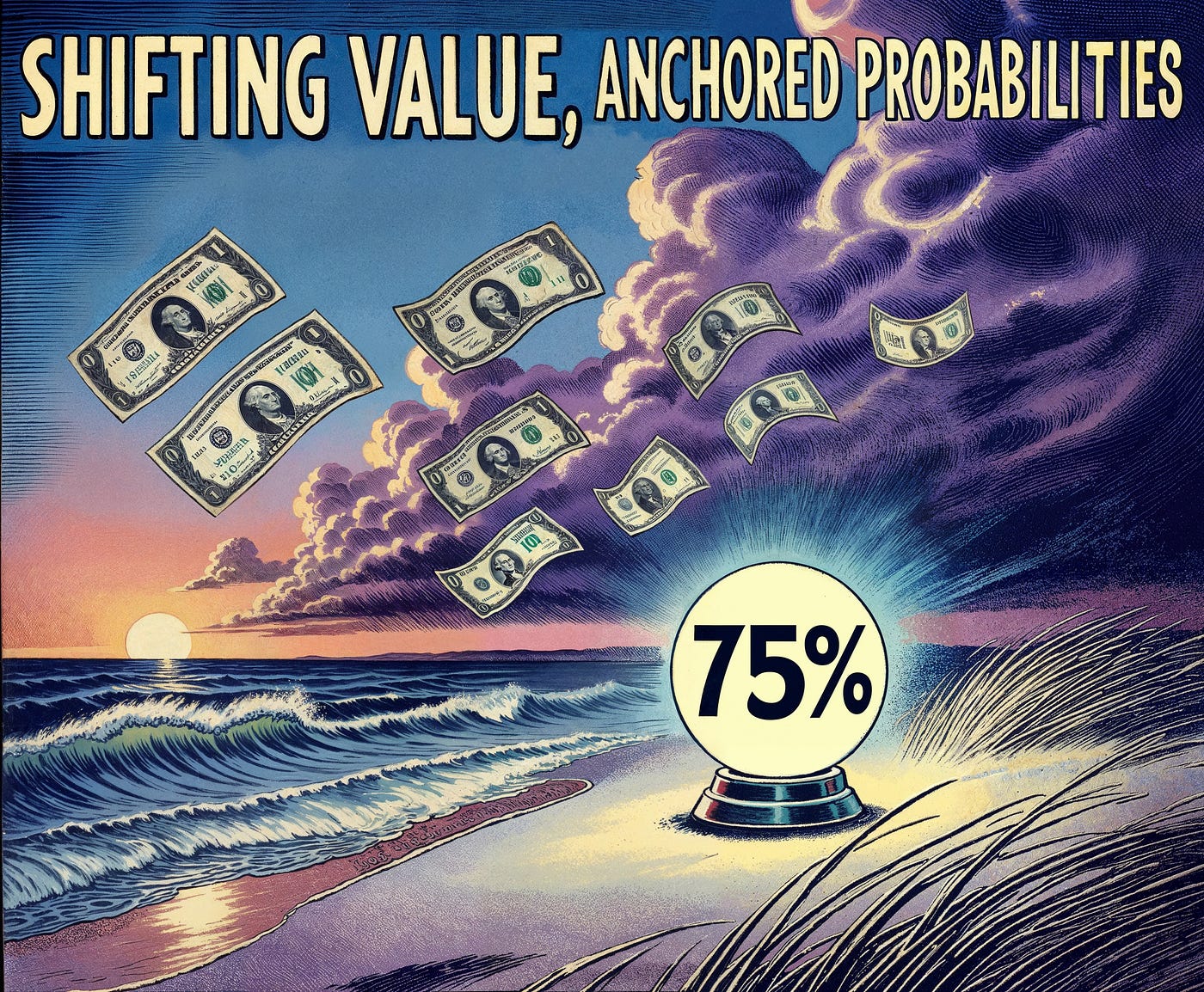
By contrast, probabilities, such as those used to represent confidence in a prediction, offer a fixed and universal frame of reference. A probability of 0% always means “impossible,” 100% means “certain,” and 50% means “fully uncertain.” This stability provides a consistent cognitive anchor that does not waver across time, culture, or economic context. While money is an abstract and mutable representation of value, probabilities are rooted in a universally comprehensible logic.
This distinction matters deeply when applied to decision-making systems. Modern economic ledgers, built on the unstable foundation of money, fail to adequately account for future risks, externalities, or moral imperatives. The instability of money as a frame of reference distorts incentives, encouraging short-term optimization at the expense of long-term accountability. For example, the future impact of a climate crisis may be “priced” in today’s markets, but that price changes unpredictably based on economic and political trends, rather than reflecting an enduring truth about the future cost of inaction.
Cognicism proposes a radical departure: retrofitting ledgers to incorporate stable, probabilistic measures of truth and confidence alongside mutable monetary tokens. By staking probabilities tied to predictions about the future, systems can track and validate claims over time, creating a stable signal that aligns decision-making with humanity’s long-term survival and moral imperatives. Unlike monetary tokens, which degrade as reference points, probabilities persist as unchanging indicators of belief and confidence. This provides a foundation for systems that prioritize foresight, truth, and sustainability over profit-driven volatility.
Integrating probabilistic measures into decision-making processes also shifts how collective action is organized. When participants stake claims with explicit confidence levels, they generate a transparent and universally interpretable signal that communities can use to guide priorities. This framework enables a “staked truth,” where collective decision-making is informed by durable and empirically validated reference points rather than the shifting sands of monetary value.
4.2 The Role of Subjectivity in Decision-Making Systems
Some might argue that science and objectivity hold the ultimate authority when it comes to guiding decision-making systems. Science provides empirically validated insights and frameworks that allow for clarity in navigating complex challenges. However, while science is invaluable, human societies are not governed solely by objective facts. Markets and democracies, as collective systems, are fundamentally about integrating perceptions of subjective well-being alongside objective knowledge. Our lived experiences are inherently subjective, and these experiences shape how we evaluate systems and make decisions. To discount subjectivity would be to ignore the deeply human dimension of societal organization.
Markets, for example, are distributed systems of value exchange where subjective assessments of worth and utility drive the flow of resources. Yet these assessments are often distorted or sidelined by economic structures that prioritize profit over more intangible truths, such as the lived experiences of marginalized communities. While market transactions are based on subjective evaluations of value, they frequently fail to incorporate non-monetizable truths, such as the consequences of ecological damage or the harm caused by systemic inequalities. This failure distorts value by excluding the voices and experiences of those who are most affected by these dynamics, such as the residents of Flint, Michigan, whose subjective realities are rendered invisible in the process.
Consider an oil pipeline conflict. On one side, the wealthy elites driving the project subjectively believe that the economic benefits and energy security it provides justify the risks involved. They frame their decisions as contributing to the “greater good,” focusing on perceived economic growth and societal progress. On the other side, local communities, whose lives and lands are directly impacted, subjectively assess the project as an existential threat to their ecology, health, and way of life. They foresee the negative externalities and eventual ecological damage that the pipeline will cause. However, the subjective realities of these communities are often dismissed as irrelevant, as they do not align with the monetizable interests of those in control. This represents a broader issue: decision-making systems frequently privilege the subjective perspectives of the powerful while sidelining those of the marginalized, particularly when these perspectives conflict with profit-driven incentives.
In democratic systems, the integration of subjective perspectives is similarly flawed. Voting, at its core, is a subjective assessment of what individuals believe will lead to a better future. However, this subjectivity is constrained by predefined political structures, where the options available to voters are preselected by political parties, institutions, and entrenched interests. These predefined choices often fail to fully capture the diversity of lived experiences and perspectives within society, limiting the ability of voters to truly express their will. In such a system, subjective agency is reduced to selecting between a narrow set of options, such as those presented by a two-party system, leaving many voices, particularly those of marginalized communities, unheard. The result is a democratic process that frequently distorts the complexity of subjective experiences, reducing them to binary choices that do not reflect the true will or needs of the population.
This issue is most pronounced for the most vulnerable members of society, those who are often the most affected by systemic harm. These individuals frequently lack the resources or platforms to make their subjective realities heard. A clear example of this was evident during the COVID-19 pandemic. While many people pushed for a return to “normalcy,” the voices of those who had lost loved ones were often sidelined. The push to reopen society ignored the subjective experiences of those who had borne the heaviest toll, with little accountability for the decisions made by those who underestimated the severity of the crisis.
The core argument here is that societies must not only recognize subjective assessments but also ensure that these non-monetizable truths, often marginalized and disregarded, are fully integrated into decision-making systems. These truths, though not easily monetized or immediately profitable, carry just as much weight as the subjective assessments made by more powerful groups. A just and accountable society must amplify the subjective realities of all individuals, especially those who are most affected by systemic harm. When subjectivity reveals the true costs of decisions made by those in power, it must be treated as a critical component of understanding the true impact of societal systems.

objectively a classic
5. Toward a Cognicist Solution: Valuing Predictive Capacity
5.1 Integrating Foresight Into the Ledger
Cognicism’s fundamental proposition is to retroactively award accurate prophets once their long-horizon predictions come true. This approach ensures that correct insights, once validated, “earn” recognition or reputation within the cognicist framework. For example, a climate scientist predicting in 1990 that Arctic sea ice would decline 50% by 2025 could see their work rewarded post hoc when the outcome aligns with their foresight.
However, the challenge lies in how predictions interact with collective dissonance. In cases where most stakeholders foresee an issue (e.g., climate change), the absence of actionable pathways or systemic inertia diminishes the value of even the most accurate predictions. When everyone agrees on a crisis but is unable to act, the foresight does not lead to transformative change. Thus, Cognicism emphasizes that the value of foresight is amplified when it diverges from mainstream consensus, challenging entrenched paradigms and unlocking new solutions.
Economic systems, as they stand, are inherently biased toward near-term optimization. Neural pathways, conditioned by token-driven incentives, reinforce short-term thinking at the expense of long-term planning. This cognitive discounting reflects the human brain’s difficulty in maintaining focus on distant threats when immediate rewards dominate attention. By integrating predictive capacity into ledgers, Cognicism reorients these incentives, ensuring that accurate, foresighted signals are not ignored until it is too late.
5.2 Market Mechanism for Retroactive Rewards
The proposed Cognicist mechanism for incentivizing accurate long-term predictions is a “predictive credibility” system, where individuals stake their predictions against mainstream consensus. However, this is not a financial asset like money. Instead, it functions as a distributed and dynamic attention mechanism, embodied by Ŧrust, that rewards foresight and credibility without reducing these qualities to mere financial instruments.
In this system, individuals can stake their predictions on future events, particularly those that challenge dominant narratives. If reality aligns with the contrarian stance, the staker’s reputation multiplies in recognized value, amplifying their voice and influence within the decision-making ecosystem. This transforms otherwise unmonetizable warnings into actionable ledger items, ensuring that moral imperatives or ecological truths cannot remain “off-ledger.” By validating these predictions retroactively, the system rewards accurate long-term foresight, even when it initially contradicts consensus views.
Ŧrust is the essence of this mechanism, acting as a dynamic signal of credibility. Unlike traditional financial tokens, Ŧrust is not a tradable or liquid asset. Instead, it redistributes attention toward sources demonstrating validated insights, particularly in the face of collective dissonance. When dominant narratives suppress alternative perspectives, Ŧrust ensures that those who stake accurate and contrarian claims gain recognition and influence as their predictions are proven correct. This creates a system where being “ahead of the curve” is not only acknowledged but actively incentivized, fostering a culture of truth-centric progress.
By linking Ŧrust directly to the validation of long-term predictions, Cognicism transcends monetary incentives, aligning rewards with accuracy, insight, and moral foresight. This dynamic approach prevents the distortions of purely financial systems while reinforcing the alignment of communal progress with humanity’s long-term survival imperatives.
Ŧrust operates as a literal attention mechanism, similar to those used in transformer models, but extended with source embeddings and temporal embeddings to account for both the origin of the information and the passage of time. These embeddings allow the system to dynamically weight predictions based on their credibility and context, ensuring that foresight and accuracy are appropriately rewarded over time. For further technical details, the Iris and Ŧrust White Paper is scheduled for release in 2025.
5.3 Social Proof of Impact
Social Proof of Impact emphasizes rewarding actions and insights that prevent long-term harm or generate positive change, even when these efforts yield no immediate profit. For example, a policy that mitigates climate damage may not generate a quick return on investment but could save trillions in future costs by averting disaster. Under standard capitalism, there is no straightforward mechanism to capture and reward such savings as near-term profit.
The Cognicist ledger addresses this gap by tracking and amplifying contributions tied to societal well-being. Ŧrust functions as a non-monetary mechanism to recognize and redistribute attention toward impactful contributions. For example, an activist who spearheads a policy to reduce emissions would see their Ŧrust increase as the policy’s benefits materialize over time. This system ensures that such actions, while lacking immediate profit incentives, are valued and rewarded for their long-term communal impact.
Unlike financial tokens, Ŧrust measures the alignment of an individual’s actions with long-term goals, prioritizing societal and ecological well-being. It amplifies the voices of those whose contributions align with these imperatives, ensuring they are empowered in future decision-making processes. By bridging this gap, the Cognicist ledger transforms traditionally unmonetizable contributions into recognized and incentivized acts of foresight and stewardship.
5.4 From Extractive to Regenerative Economies: Healing Sacrifice Zones
5.4 From Extractive to Regenerative Economies: Healing Sacrifice Zones
Capitalism excels at transforming resources into infrastructure but does so through an extractive lens. This system views localities as valuable only if they contain resources to extract, whether those resources are physical, like oil or timber, or abstract, like labor. At its core, this extraction logic treats each locality as a short-term resource deposit, once the usable assets are exhausted, the market no longer sees value in maintaining that place. When a locality is depleted or when the cost of repair exceeds its perceived economic value, it is often labeled a “sacrifice zone.” These zones are effectively “totaled,” much like a car deemed too costly to repair. However, unlike cars, cities and the people within them persist, often in states of neglect and suffering.
Coal towns across Appalachia illustrate this pattern vividly: for decades, these communities thrived on mining until the coal seams were tapped out or no longer profitable. When the companies left, residents were abandoned to face ecological devastation, joblessness, and failing infrastructure, classic hallmarks of a ‘sacrifice zone.’ Without a mechanism to reward ongoing stewardship or regeneration, capitalism repeatedly enacts a “boom-bust” cycle, discarding entire communities the moment profitability drops. The result is not merely economic decline but also lasting ecological damage, social disruption, and infrastructure decay, as we see in countless post-industrial regions around the world.
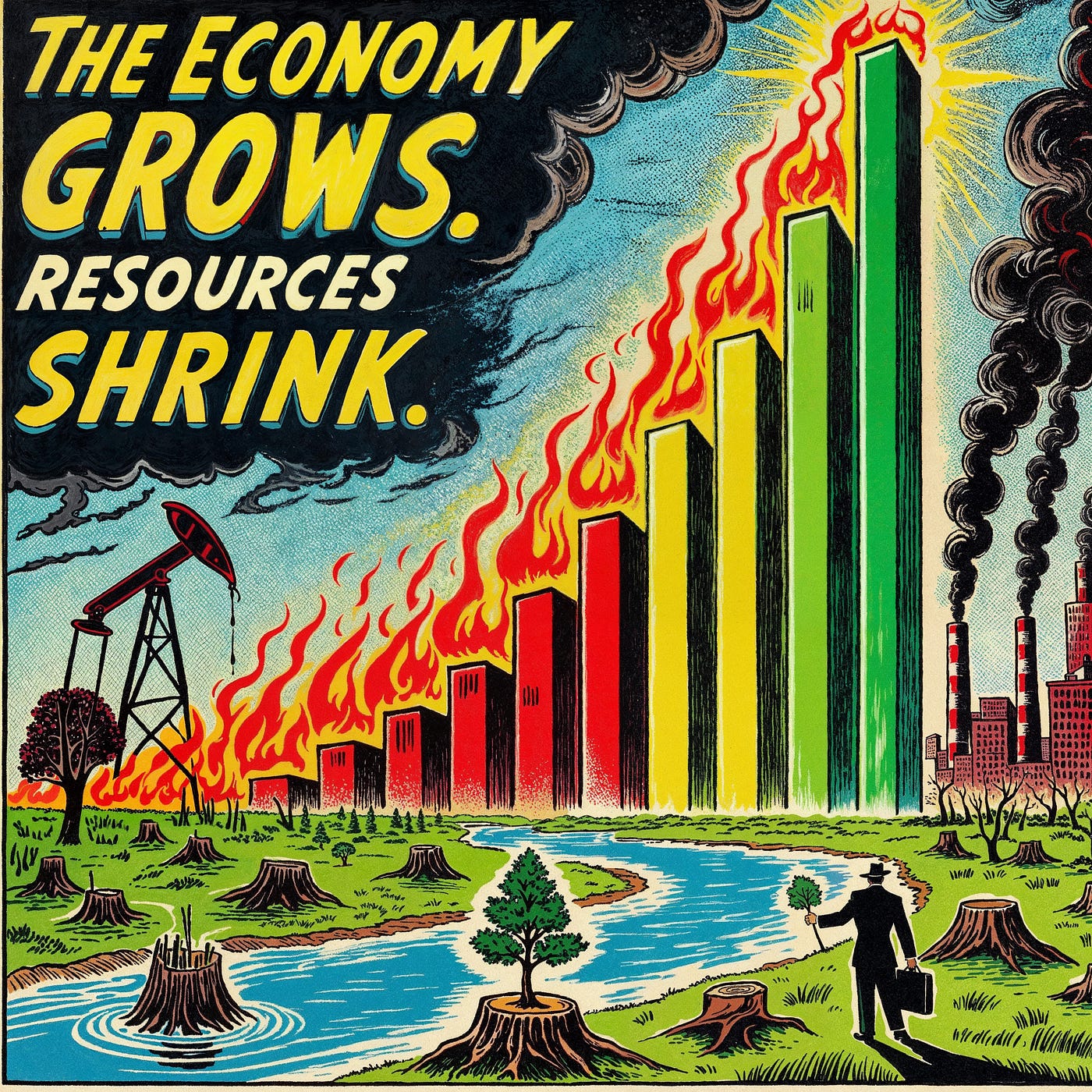
Flint, Michigan represents another emblematic example. Years of neglect and exploitation have left its water infrastructure in shambles, yet no mechanisms within capitalism encourage systemic regeneration of the city. The economic system sees Flint not as a potential asset but as a liability, its repair too costly, its people too poor to contribute to traditional markets. This creates a feedback loop of abandonment, where economic forces amplify systemic failure.
This extractive mindset explains why capitalism struggles with truly regenerative projects. Consider the theoretical challenge of terraforming Mars: capitalism cannot function effectively there precisely because there are no ready-made resources to extract and monetize. Terraforming is by nature a “regenerative” endeavor rather than an “extractive” one. On Earth, capitalism’s strength lies in exploiting existing materials or labor for near-term profit, yet a Martian colony would demand decades, or centuries, of investment before yielding any tangible returns. No conventional market logic can justify pouring capital into a world that provides no immediate extraction payoff.
In this context, Ŧrust provides a fundamentally different signal: the harder something is to fix, the greater the reputational opportunity it becomes. In the current system, areas like Flint or post-mining Appalachian communities become sources of learned helplessness, everyone collectively predicts they cannot be fixed, creating a societal consensus of cynicism. “No one can help the homeless, no one can fix health care, no one can fix politics.” These beliefs become self-reinforcing, further entrenching neglect.
Ŧrust disrupts this cycle by flipping sacrifice zones into reputational opportunities. The universal cynicism surrounding these areas creates a powerful inverse signal: because most people believe regeneration is impossible, those who stake their reputation on solving these challenges and succeed gain enormous Ŧrust. Regeneration becomes a valued behavior, with rewards proportional to the scope of the challenge. In this way, Ŧrust transforms neglected localities from financial liabilities into reputational assets.
This reorientation extends beyond Earth-bound challenges. Cognicism thrives on long-horizon incentives, rewarding those who stake their reputation on transformative projects, such as making Mars habitable, long before profitability is in sight. By embedding foresight, ecological stewardship, and communal well-being into its core metrics, Cognicism can sustain the protracted, regenerative work that capitalism’s extractive logic inherently cannot justify. Whether revitalizing abandoned communities on Earth or making a new planet habitable, the principle remains the same: the harder the challenge, the greater the opportunity for those who can successfully address it.

, -
5.5 A New Role for Wealth and Leadership
Critics of capitalism often paint the wealthy elite as malicious or uncaring, but the Cognicist lens suggests a different interpretation. The wealthy are not inherently evil, they are optimization agents trained on an incomplete loss function. CEOs, for example, are social algorithms tasked with optimizing shareholder profit. They rarely question this function because they are embedded within a system that lacks alternative signals. This is not to absolve the elite of accountability but to highlight the system’s failure to provide better metrics for success.
Cognicism posits that if the loss function changes, so too will the optimization strategies of the wealthy. A system built on Ŧrust incentivizes behaviors that align with communal and ecological healing. When solving systemic problems like homelessness, healthcare, or climate resilience becomes a measurable way to gain influence and reputational capital, the wealthy will pivot to “win” in this new system.
This shift redefines the very concept of assets. Under capitalism, assets are things that generate profit, land, factories, intellectual property. Under Ŧrust, assets become the regenerative potential of localities and the capacity for individuals or organizations to heal and restore value to neglected spaces. Suddenly, “helping people” becomes an incentivized game. It doesn’t require a business model or immediate profitability. The system rewards the behavior itself, turning moral imperatives into actionable goals without the need for monetization.
By aligning wealth and influence with quantifiable regenerative outcomes, Cognicism does not abolish capitalism’s competitive engine. Instead, it replaces the fuel: no longer “number-go-up” but “impact-go-up.”
6. Validating Prediction: Infrastructure and Mechanisms
6.1 Market Bubbles and Prophet Incentives
Stock or crypto markets exemplify how short-run mania often overshadows critical long-term signals, leading to unsustainable bubbles that eventually collapse under the weight of neglected externalities. A Cognicist approach addresses this dynamic by introducing mechanisms like Ŧrust, which functions as a reputational and attention-based incentive system for accurate long-term predictions.
In a “prophecy market” governed by Ŧrust, even individuals without significant financial capital, such as a scientifically valid but underfunded climate researcher, can stake their predictions. If their foresight proves accurate, they become retroactively reputationally “wealthy,” gaining amplified credibility and influence within the decision-making ecosystem. This shift ensures that valid, long-term insights are recognized and rewarded, even if they initially contradict mainstream consensus or fail to generate immediate profit.
Unlike speculative markets that reward financial capital alone, Ŧrust dynamically redistributes attention and credibility based on validated insights. This distinction prevents the system from devolving into a financial bubble. Instead of treating Ŧrust as a tradable token, it operates as a context-sensitive signal that elevates foresight and truth-telling within a broader framework of communal values and long-term priorities. By incentivizing accurate predictions and amplifying the voices of those ahead of the curve, the Ŧrust system counters the short-run distortions typical of traditional markets and fosters a culture of truth-centric decision-making.
6.2 Gains for Recognizing Negative Externalities in Real Time
Capitalism’s strength lies in its real-time polling of want: markets constantly aggregate and reflect human desires through prices, directing resources with remarkable efficiency. However, while this system excels at capturing immediate consumer preferences, it fails to adequately account for long-term risks or truths that lack direct monetization.
In parallel, social networks have created a proto-system for real-time polling, not of want, but of belief. Posts, tweets, and shared content reflect the collective perceptions and priorities of a society in near real time. Yet, this emergent system lacks the structured accountability and lasting reputational weight needed to influence decision-making in the way money influences markets. Without a ledger to track reputational stakes and validate claims over time, the memetic weight of these beliefs dissipates, reducing their capacity to drive meaningful action.
A Cognicist system proposes integrating these belief-polling mechanisms with a blockchain-powered ledger. Posts and predictions would carry reputational weight tied to the credibility of the individual or group making them, with their accuracy validated over time. For example, if someone stakes a claim about an impending pandemic or infrastructural risk, and their prediction proves accurate, the ledger would amplify their reputational weight, similar to how money amplifies influence in traditional markets.
By embedding beliefs into a reputational ledger, this system creates a marketplace of ideas where validated foresight gains lasting memetic weight in minds and systems. This parallels the role of money in capitalism, which translates immediate preferences into economic action. However, instead of purely reflecting want, the Cognicist approach integrates foresight and moral alignment, ensuring that long-term truths and critical risks gain traction in collective decision-making.
In doing so, this system transforms the proto-real-time polling of belief into a robust infrastructure for societal direction, making it possible to prioritize accurate insights and align collective action with humanity’s survival and progress.
6.3 Integrating These Mechanisms with Blockchain
Blockchain technology provides an exceptional framework for implementing Cognicist principles by dynamically validating and securing long-term predictions. It functions as a continuously updating ledger, where past claims are integrated into a living model that recalculates the weight of prior predictions against the present trajectory of collective belief. This system doesn’t rely on static validation but instead tracks the movement of collective belief over time, juxtaposing past consensus with individual steadfastness to identify signals of foresight. Those who maintain accurate contrarian positions while collective narratives shift gain amplified credibility, producing an enduring reputational signal.
An essential property of this system is its inverse relationship between the temporal distance of a prediction and the difficulty of its validation. The further back in time a claim was made, the more securely it is embedded in the blockchain, making its retroactive falsification extraordinarily difficult. In contrast, predictions become increasingly difficult the further they extend into the future.
Moreover, this ledger has unique degrees of protection. Unlike conventional attacks on blockchain (e.g., a 51% attack), tampering with such records would require not only vast computational resources but also the ability to predict the future with perfect accuracy, share those predictions publicly for all to see, have them widely dismissed or disagreed with, and then have the predicted future come to pass exactly as stated. Additionally, any manipulation would also require aligning fabricated data with an evolving, decentralized, and cryptographically validated historical narrative, a nearly insurmountable challenge.
Time itself acts as the fundamental security mechanism here. Unlike a traditional 51% attack which only requires overwhelming force at a single point in time to execute a simple token transfer, manipulating this system would require sustaining false narratives over extended periods while perfectly predicting future states of collective belief. This becomes energetically unfeasible, an attacker would need to continuously commit resources to maintain these false claims across time, all while accurately foreseeing how collective belief will evolve. Moreover, since influence in the system must be earned through validated predictions over time, newly created accounts or bot networks cannot simply overwhelm the system through volume alone. They must first build reputational weight through accurate predictions, which itself requires the passage of time. This temporal dimension creates a unique form of protection that grows stronger as predictions age.
This inherent difficulty in gaming the system is compounded by the inherent difficulty of predicting future events with precision, meaning only genuinely accurate predictions will gain weight over time. The more distant and unlikely the prediction at its inception, the more powerful its signal becomes when validated, as it demonstrates foresight against collective dissonance.
The further into the future one attempts to project, the more uncertain and complex the prediction becomes. This inherent uncertainty amplifies the value of accurate long-term predictions. Blockchain’s structure ensures that these predictions, once recorded, are preserved as tamper-resistant data points that contribute to a cumulative signal over time. The interaction between the securely validated past and the dynamically unfolding present creates a feedback loop, where the system continuously refines its recognition of accurate foresight while weeding out noise or manipulation.
This inverse relationship, where the certainty of past validation strengthens over time while future projections grow increasingly challenging, forms the cornerstone of the system’s robustness. Amplifying the voices of those who were right in the face of collective dissonance becomes an almost unhackable signal, as the dynamics of shifting belief and long-term uncertainty are exceptionally resistant to distortion. This ensures that reputational weight and influence are awarded not based on transient popularity but on enduring accuracy and foresight, fostering a culture of truth-centric progress that rewards contributions aligned with long-term communal and ecological imperatives.
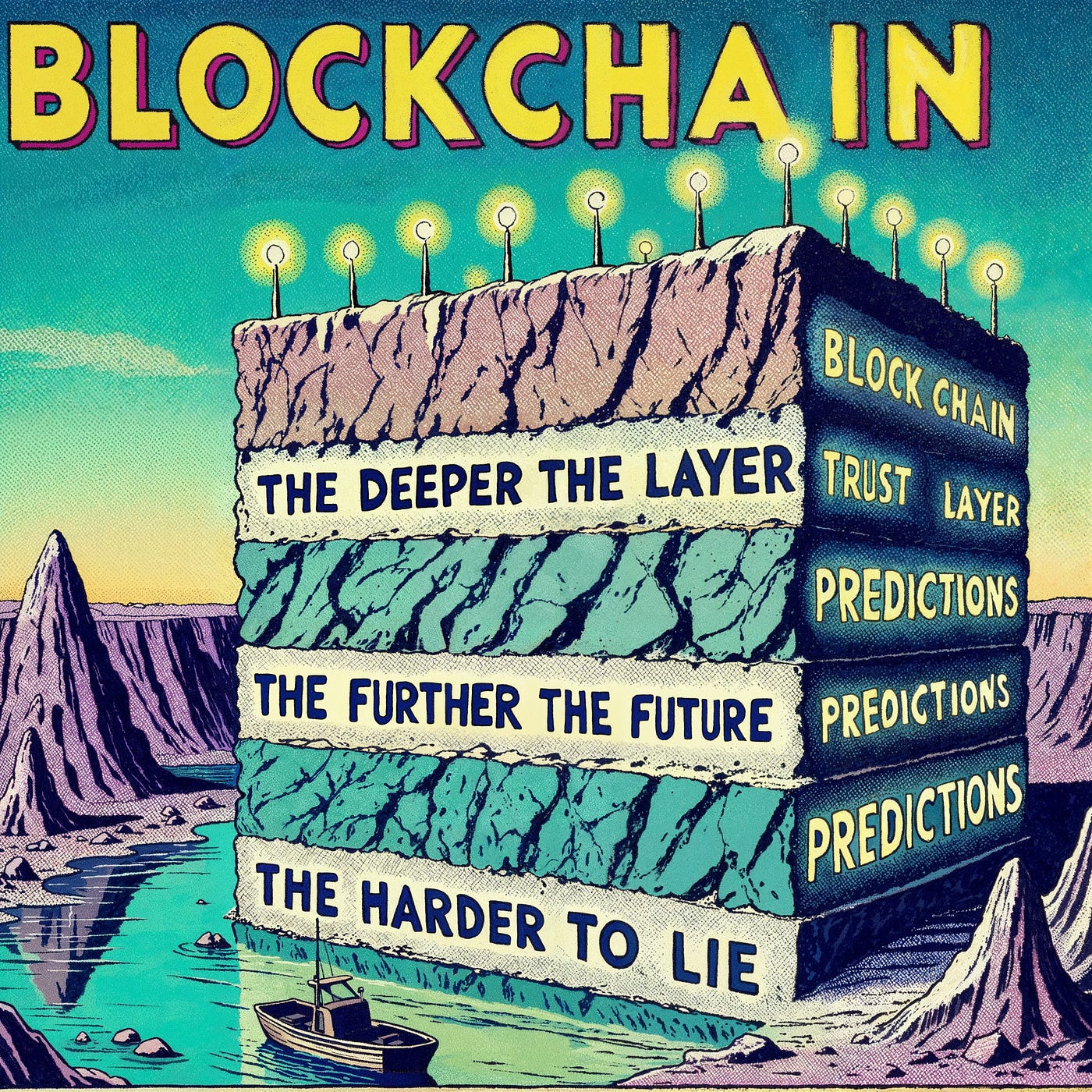
6.4 Technical Architecture
The system is implemented through a network of Irises, specialized language models that extend transformer architecture with temporal embeddings for capturing evolving narratives and source embeddings for discerning provenance. At their core is the Ŧrust attention mechanism, which functions similarly to standard transformer attention (query-key-value) but incorporates temporal and source information through a mechanism that adaptively weighs these components based on context.
This attention architecture enables each Iris to dynamically adjust weights based on the validation of long-term predictions against unfolding reality. The distributed network maintains a continuously updating model through a federated learning chain, where multiple Irises collectively recalculate the weight of prior predictions against the present trajectory of collective belief, creating an ever-evolving map of predictive accuracy and source credibility. This decentralized architecture ensures there is no single “oracle” defining truth, instead, truth emerges from the distributed validation of predictions across the network.
These technical capabilities directly enable the mechanisms described above, from validating long-term predictions in blockchain to tracking the real-time evolution of belief and reputation. The further a prediction extends into the future, the more uncertainty it must navigate, while the deeper a record exists in the blockchain’s history, the more securely it can be validated. For complete technical specifications of the embedding schemes, and attention computations, see the Iris and Ŧrust White Paper (2025).
7. Implications for Climate, Social Justice, and Future Tech
7.1 Climate
A Cognicist ledger fundamentally alters the timeline for addressing climate change by amplifying early warnings from those with foresight, regardless of their financial resources. For example, a climate scientist who predicts a 50% loss of Arctic sea ice by 2025 could stake their prediction on the ledger as early as 1990. Over time, as data begins to validate their claim, their reputational weight in the ledger increases, ensuring that their voice becomes influential long before the crisis fully materializes. This system mitigates one of the primary failings of existing markets: the inability to act proactively on future crises because they lack near-term profitability.
The ledger dynamically shifts the focus from short-term economic gains to long-term ecological stability by rewarding individuals and groups who correctly foresee tipping points, such as ocean acidification, biodiversity collapse, or desertification. These individuals do not need to wait for economic incentives to align with reality; instead, their predictive accuracy retroactively increases their influence, creating a new incentive structure. This foresight-driven credibility accelerates the deployment of sustainable policies, such as renewable energy transitions, reforestation programs, or water conservation measures. By embedding long-term ecological foresight into the economic system, Cognicism transforms climate action from a reactive scramble into a preemptive strategy, fostering earlier and more aggressive interventions.
7.2 Social Justice
Social justice movements often struggle to gain traction because their advocates lack the financial resources to amplify their warnings about future societal breakdowns. Structural inequalities, such as the impacts of environmental racism, mass incarceration, or predatory lending, frequently lead to predictable but ignored crises. A Cognicist ledger ensures that activists who stake accurate predictions about these long-term outcomes gain reputational credibility over time, shifting the narrative toward proactive reform.
For instance, an activist warning about the systemic consequences of discriminatory housing practices could stake their prediction on the ledger. If, years later, these practices lead to widespread economic destabilization in marginalized communities, the activist’s foresight would retroactively gain weight. This increased credibility amplifies their voice in policy debates, turning them into a recognized authority not merely on moral grounds but through empirically validated foresight. Such a system transforms social justice advocates from overlooked moral voices into ledger-backed catalysts for systemic change, ensuring that society addresses inequalities before they escalate into crises. By aligning foresight with social progress, Cognicism provides an infrastructure to address the deep-seated injustices that often go unaddressed until they erupt into conflict.
7.3 AI and Tech Risks
Concerns about advanced AI, including fears of catastrophic risks like misalignment or “foom,” highlight the urgency of designing robust governance and alignment systems. Cognicism leverages democratic, time- and source-aware LLMs called Irises to address these challenges. These models are fine-tuned using a custom approach that extends Reinforcement Learning from Human Feedback (RLHF) and builds upon ideas from Constitutional AI.
Irises integrate a protocol called FourThought, which allows communities to stake beliefs about the past, present, and future along dimensions of truth, morality, and uncertainty. This process, known as belief staking, ties individual tenets to unique IDs, creating a decentralized ledger of reputational weight. Unlike traditional RLHF systems, which rely on feedback from a limited group of human trainers, FourThought enables collective input from the community, making alignment a more democratic and dynamic process.
The models adapt based on structured feedback. Valence (alignment with moral values) and uncertainty (confidence in truth) scores guide fine-tuning, ensuring that Irises evolve in response to collective priorities and demonstrated foresight. Irises also generate their own FourThought-compliant outputs, staking claims and predictions within the same framework, creating a self-reflective and accountable alignment process.
This system is recursively protective. Critics of Cognicism, including those fearing the misuse or failure of its AI models, are encouraged to stake their concerns and predictions. Accurate critiques are rewarded through the same mechanism, directly influencing the models’ learning processes and shaping their priorities. By embedding critique and foresight into its adaptive structure, Cognicism not only addresses current AI risks but transforms fears into actionable safeguards, fostering resilience and collaboration while aligning technology with human values.
7.4 Hierarchy, Wealth, and the Flow of Information
In capitalist systems, wealth amplifies speech, shaping the flow of information within stratified hierarchies. Those seeking to create systemic change often face a paradox: to gain the resources and influence necessary for meaningful action, they must engage in wealth accumulation, frequently through processes that conflict with the moral imperatives they seek to champion.
This recursive contradiction forces individuals to balance truth-telling with the need to secure resources, often limiting their ability to challenge power directly. Truth tends to flow downward or outward, constrained by the incentives of those in higher positions to preserve their status. By contrast, Cognicist systems, through mechanisms like Ŧrust, aim to equalize this dynamic. By amplifying voices that challenge dominant narratives and rewarding accurate, impactful insights, Cognicism reduces the reliance on wealth as the sole amplifier of speech, enabling a more equitable flow of truth.
8. Addressing Possible Criticisms
8.1 “Won’t This Just Create a New Speculative Bubble?”
Critics may fear that a Cognicist system, particularly one involving prophecy markets, could devolve into speculative bubbles akin to financial speculation. However, Cognicism fundamentally avoids this risk by leveraging Ŧrust, a dynamic and contextual attention mechanism, rather than a static, tradable asset. Unlike speculation driven by hype or monetary incentives, Ŧrust accrual depends on accurate, demonstrable foresight that aligns with both communal values and long-term realities.
Through the FourThought protocol, Ŧrust is bound not just to predictive accuracy but also to valence and moral implications. This ensures that the system rewards insights across a wide range of human concerns, from environmental crises to social justice and technological risks, not merely the prediction of whether a stock or token will rise or fall. Because Ŧrust operates as the contextual remainder of the transformer equation, it reflects which sources are most attended to in specific contexts, dynamically adjusting based on communal feedback and evolving moral priorities.
In this system, thinking about the future does not cause Ŧrust to “go up” or “down” in a monetary sense. Instead, Ŧrust acts as a measure of influence and credibility that is intrinsically tied to the relevance and significance of contributions. Predictions staked in this framework gain weight when they address matters that people care deeply about, ensuring that the mechanism incentivizes meaningful foresight rather than speculative distortion.
Moreover, by anchoring these mechanisms in decentralized systems such as blockchain, Cognicism ensures resistance to manipulation. Transparent processes involving decentralized oracles and communal validation prevent the accumulation of Ŧrust through mere consensus or speculative cycles. This makes Ŧrust fundamentally distinct from financial speculation, focusing instead on rewarding contributions that align with collective well-being and long-term imperatives.
In short, Cognicism’s design avoids the pitfalls of speculative bubbles by embedding foresight, morality, and communal priorities into its reward structures. Ŧrust is not a tradable token but a dynamic and context-sensitive mechanism that aligns with the collective good, fostering truth-centric progress rather than market-driven distortion.
8.2 Not Utopian, But Essential
Detractors may label it utopian to pay future-seers post-hoc. But ironically, the status quo is already an “engineering hack”: it orients civilization around the short-run “profit” function, ignoring intangible moral or environmental truths. Cognicism simply broadens the ledger to incorporate the real costs and benefits discovered over decades, mitigating catastrophic bubble-burst cycles.
The goal of Cognicism is not to dismantle capitalism’s ability to scale resources but to address its systemic bias toward short-term optimization. This approach does not reject the market’s dynamism but seeks to align it with humanity’s long-term survival and moral imperatives. By balancing near-term efficiency with structures that reward foresight, Cognicism offers a pragmatic evolution of economic systems, ensuring they remain adaptive while incorporating the real costs and benefits discovered over decades.
8.3 The Validation Challenge
Critics often ask how predictions can be reliably validated over long time horizons, a challenge traditionally framed as the “oracle problem”, who or what can serve as the arbiter of truth? The solution emerges through the distributed network of Irises continuously recalculating the trajectory of collective belief against blockchain-secured historical predictions. There is no single oracle determining truth; instead, validation occurs through the federated learning chain where multiple Irises track the evolution of predictions against reality. The system grows more resilient over time as the ledger accumulates a record of unheard warnings that spoke truth in the face of collective dissonance.
Many of these validations crystallize into unambiguous anchor points in our collective memory and documentation. Consider the COVID-19 pandemic: prominent figures like Trump and Musk publicly predicted early in 2020 that the virus would quickly disappear. Yet the reality of the pandemic’s continuation and the occurrence of global quarantines became undeniable facts recorded in billions of social media posts, news articles, and personal accounts. Even analyzing raw language models trained on internet-scale data reveals these base realities as clear consensus points, despite widespread disagreement about interpretations or causes. Such anchor points provide unambiguous validation of who accurately foresaw unfolding events versus those who failed to predict obvious outcomes despite their positions of influence. The system leverages these clear historical validations while maintaining nuanced tracking of predictions where validation remains more complex or contested. Where new crises emerge with significant uncertainty, these anchor points allow us to upweight voices that demonstrated wisdom in similar past situations, amplifying their insights when they’re needed most.
8.4 The Non-Profit Paradox: Penalizing Institutions of Social Good
Critics of Cognicism may point to non-profits, NGOs, and charities as existing mechanisms for addressing societal and ecological harm. However, the reality is that our current economic rules make it systematically harder for non-profits to compete and do social good, while simultaneously making it easier for for-profit entities to perpetuate harm. Non-profits that account for negative externalities, such as fair wages, environmental restoration, or equitable resource access, are inherently disadvantaged in a system that rewards profit above all else.
By framing social impact as a “loss,” capitalism creates a perverse reality: institutions designed to address harm are economically penalized for doing so. For-profits externalize costs, exploiting labor, depleting resources, and degrading ecosystems, to maximize short-term returns. These gains allow them to reinvest, scale, and dominate markets, while non-profits must scrape together funding through donations and grants. As a result, the massive causal and energetic impact of corporations effectively wipes out the contributions of non-profits, like throwing a pebble into a sea of massive waves.
When we think of the market as a whole, we must consider where the collective energy flows. When you sum all of the energy within the system, does it point toward solving systemic issues like poverty and ecological restoration, or does the overwhelming majority drive resources toward extractive, short-term pursuits? Efforts within the current system that attempt to use its rules to create meaningful progress will always fail relative to the energy of the market as a whole. Like the pebble in the wave, even the most genuine efforts are swept away by the far larger forces perpetuating harm.
This imbalance is not an issue of efficiency but of structural bias. Non-profits are trapped in a framework that punishes foresight and ethical action. The institutions most equipped to address long-term harm, whether climate crises, public health inequities, or systemic inequality, are relegated to the margins, while for-profits benefit from the very harms they create. Without mechanisms to explicitly reward regenerative and ethical actions, non-profits will remain in a cycle of competitive disadvantage, unable to scale their impact.
The Cognicist framework directly addresses this paradox by redefining success metrics and embedding foresight into economic systems. Mechanisms like Ŧrust ensure that regenerative actions and long-term impacts are rewarded, making it harder for for-profits to ignore social good without incurring reputational and economic costs. Simultaneously, non-profits are empowered to thrive, with their contributions amplified and incentivized within a system that values collective well-being over extractive gains. In this rebalanced framework, the institutions of social good are no longer punished for their purpose, they become critical drivers of systemic transformation.
9. Conclusion: From “Number Go Up” to “Truth-Centric Progress”
The Cognicist Theory of Capitalism contends that profit alone, though powerful, acts as a narrow reinforcement signal, systematically ignoring existential or slow-burn crises. By analyzing the literal neural reorganization under near-term incentives, we see how human cognition normalizes the destructive or exploitative in pursuit of quick ROI. The prophetic voices who see climate tipping points, pandemics, or social meltdowns long before markets do are dismissed unless they carry significant capital to “bet on their truth.”
Yet, ironically, capital alone can’t weigh intangible truths when those who see them lack the capital to make those insights actionable via market mechanisms. Cognicism thus proposes retrofitting capital’s ledger with predictive capacity valuation, amplifying attention and influence for accurate foresight, effectively embedding future signals into present decision-making. This ensures that near-term logic no longer tramples vital moral and ecological imperatives.
As shown through our analysis of memetic bubbles, Markov blankets, and neural annealing, ignoring unmonetized signals leads to cyclical meltdown. A new or evolved ledger can harness capitalism’s efficiency while preventing these slow crises from spiraling out of control. It’s neither anti-capitalist nor fantastical: it is the logical next step in ledger evolution, bridging near-term “efficiency” with moral stewardship over decades. In short, “the market punishes prophets” only because existing frameworks omit them. Once recognized, unbounded “number go up” may become truth-centric progress, unifying short-run dynamism with the collective good of humanity’s future.
References
- Ash, John. 2024. The Neural Politics of Normalization. Medium.
- Ash, John. 2024. The Geometry of Culture: Mapping Memetic Space. Medium.
- Ash, John. 2023. Profit is a Paperclip Maximizer. Medium.
- Ash, John. 2023. From Distraction to Action. Medium.
- Ash, John. 2023. The Prophet Incentive. Medium.
- Atasoy, S., et al. 2017. Connectome-specific harmonic waves: a new framework for understanding the brain’s functional connectivity and dynamics. NeuroImage.
- Bell, K. 2023. Criticisms rise against Tesla’s quality control amid profitability push. The Guardian.
- Carhart-Harris, R. L., et al. 2014. The entropic brain: a theory of conscious states informed by neuroimaging research with psychedelics. Frontiers in Human Neuroscience.
- Christiano, P. et al. 2017. Deep reinforcement learning from human preferences. arXiv.
- Coase, R. H. (1960).The Problem of Social Cost. Journal of Law and Economics
- Dawkins, R. 1976. The Selfish Gene. Oxford University Press.
- Dietze, P., & Knowles, E. D. 2016. Social Class and the Motivational Relevance of Other Human Beings: Evidence from Visual Attention. Psychological Science.
- Friston, K. 2010. The free-energy principle: a unified brain theory? Nature Reviews Neuroscience 11(2).
- Glimcher, P. W., Camerer, C. F., Fehr, E., & Poldrack, R. A. 2009. Neuroeconomics: Decision Making and the Brain. London: Elsevier Academic Press.
- Graeber, D. 2011. Debt: The First 5,000 Years. Melville House.
- Gu, S., Cieslak, M., Baird, B., Muldoon, S. F., Grafton, S. T., Pasqualetti, F., & Bassett, D. S. (2018). The energy landscape of neurophysiological activity implicit in brain network structure. Scientific Reports.
- Hauser, O. P., & Norton, M. I. 2017. (Mis)perceptions of inequality. Current Opinion in Psychology 18:21–25.
- Hesse, J., & Gross, T. 2014. Self-organized criticality as a fundamental property of neural systems. Frontiers in Systems Neuroscience.
- Hinton, G. E., & Salakhutdinov, R. R. 2006. Reducing the dimensionality of data with neural networks. Science 313(5786).
- Hipólito, I., Ramstead, M., Convertino, L., Bhat, A., Friston, K., & Parr, T. 2021. Markov blankets in the brain. Neuroscience & Biobehavioral Reviews.
- Hogeveen, J., Inzlicht, M., & Obhi, S. S. 2014. Power Changes How the Brain Responds to Others. Journal of Experimental Psychology: General.
- Hull, D. 2018. Elon Musk’s “funding secured” tweet cost him his chairmanship and millions in fines. Bloomberg.
- Johnson, M. E. 2019. Neural Annealing: Toward a Neural Theory of Everything. OpenTheory.net.
- Keltner, D. 2016. The Power Paradox: How We Gain and Lose Influence. Penguin Press.
- Kolodny, L. 2018. SEC sues Elon Musk, alleging fraud over “funding secured” tweets. CNBC.
- Kolodny, L. 2022. How Elon Musk’s political rhetoric shifted as Tesla scaled. CNBC.
- Korosec, K. 2018. Elon Musk says Tesla was weeks from running out of money during Model 3 ramp. TechCrunch.
- Kraus, M. W., et al. 2010. Social Class, Contextualism, and Empathic Accuracy. Psychological Science.
- Lammers, J., & Van Beest, I. 2013. The effects of power on immorality. Power, Politics and Paranoia: Why People are Suspicious about their Leaders. Cambridge University Press.
- Levy, D. J., & Glimcher, P. W. 2012. The root of all value: a neural common currency for choice. Current Opinion in Neurobiology.
- NHTSA. 2017. Tesla Model S and Model X earn 5-star safety ratings.National Highway Traffic Safety Administration.
- Piff, P. K., et al. 2012. Higher Social Class Predicts Increased Unethical Behavior. PNAS.
- Piff, P. K., Kraus, M. W., Côté, S., Cheng, B. H., & Keltner, D. 2010. Having Less, Giving More: The Influence of Social Class on Prosocial Behavior. Journal of Personality and Social Psychology.
- Ramstead, M. J., Badcock, P., & Friston, K. 2019. Answering Schrödinger’s question: A free-energy formulation. Physics of Life Reviews 24.
- Rutherford, J. 2008. The culture of capitalism. Soundings.
- SEC. 2018. Elon Musk Charged With Securities Fraud for Misleading Tweets. U.S. Securities and Exchange Commission.
- Tetlock, P. E., & Gardner, D. 2016. Superforecasting: The Art and Science of Prediction. Crown.
- Thaler, R. H. 1999. Mental accounting matters. Journal of Behavioral Decision Making.
- Zelizer, V. A. 1989. The social meaning of money: ‘Special monies’. American Journal of Sociology.